How to Grow Telegram Channel: Master Your Growth
Master how to grow telegram channel using our proven 2026 framework. Get actionable steps for content, promotion, and analytics for rapid growth.

Most advice on how to grow a Telegram channel is too vague to act on. "Post consistently." "Collaborate with others." "Share quality content." None of it is wrong — it's just incomplete. When a channel stalls, those slogans don't tell you whether the problem is timing, format, retention, or content that gets views but never gets forwarded.
That gap matters. According to Telegram usage statistics collected by RichAds, the platform reached 1 billion monthly active users in March 2025, with 2.5 million new users joining daily and over 1 trillion monthly views across communities. The opportunity is obvious — for a full breakdown of what the platform enables, see the core benefits of Telegram for 2026. Earning attention inside that volume is the hard part.
The Real Bottleneck Is Measurement
The most-repeated growth advice pushes the same checklist: pick a niche, post often, cross-promote, run giveaways. That can produce short bursts, but it doesn't build a channel that keeps growing after the first push.
The missing piece is knowing what's working. If you don't know when your audience is active, which formats trigger shares, or which posts cause silent unsubscribes, you're not running a growth strategy — you're publishing and hoping.
Channels posting during audience-specific peak hours see 25–40% higher view rates. Most stalls come from mistimed posts, not low volume. Most channel owners diagnose the wrong problem — they assume they need more posts when they really need better timing, or assume they need paid promotion when the content itself isn't getting forwarded. The patterns are visible in the data. Most people aren't looking.
Define a Sharp Audience Promise
Subscriber growth follows positioning quality. A vague channel promise attracts the wrong people, produces inconsistent publishing, and makes every content decision harder. A sharp one makes decisions faster and creates content that compounds.
"We share marketing tips" gives you no operating filter. "We help B2B founders turn product updates into content buyers will read" does — it names the audience, the problem, and the expected outcome.
Before publishing, answer four questions:
- Who is this for — Name a real audience. "Freelance designers trying to get repeat clients" is usable. "Entrepreneurs" is not. If you're guessing, run a proper audience analysis instead of a one-line persona.
- What problem do they return for — Daily market summaries, tactical teardowns, job leads with context. If the answer sounds broad, narrow it.
- Why Telegram — The format benefits from speed, direct delivery, and forwarding. If your content needs long-form search traffic or polished visual storytelling, another channel may deserve priority.
- What will you not post — If subscribers joined for tactical analysis, personal updates and off-topic links erode trust fast.
Set metrics that expose performance, not vanity. Subscriber count is a lagging indicator. Track view consistency, forward rate, and whether new subscribers keep reading after joining. A channel can grow through paid placements and still be weak if forwards stay low and new joiners fade.
If you use analytics tools like Statiko, this is where the work gets precise. Competitor benchmarking shows whether your view patterns are normal for the niche. Edit and deletion tracking helps explain sudden performance shifts. AI-assisted pattern detection surfaces recurring traits in posts that earn stronger reach. That's a growth compass, not a vanity dashboard.
If your channel description still feels fuzzy, reviewing examples of a strong Telegram channel description helps tighten the promise before launch.

Build a Content System, Not a Posting Habit
Channels don't fail because they run out of ideas. They fail because their content mix is chaotic — a long opinion piece one day, a recycled link the next, a poll with no follow-up. Subscribers can't form a habit around inconsistency.
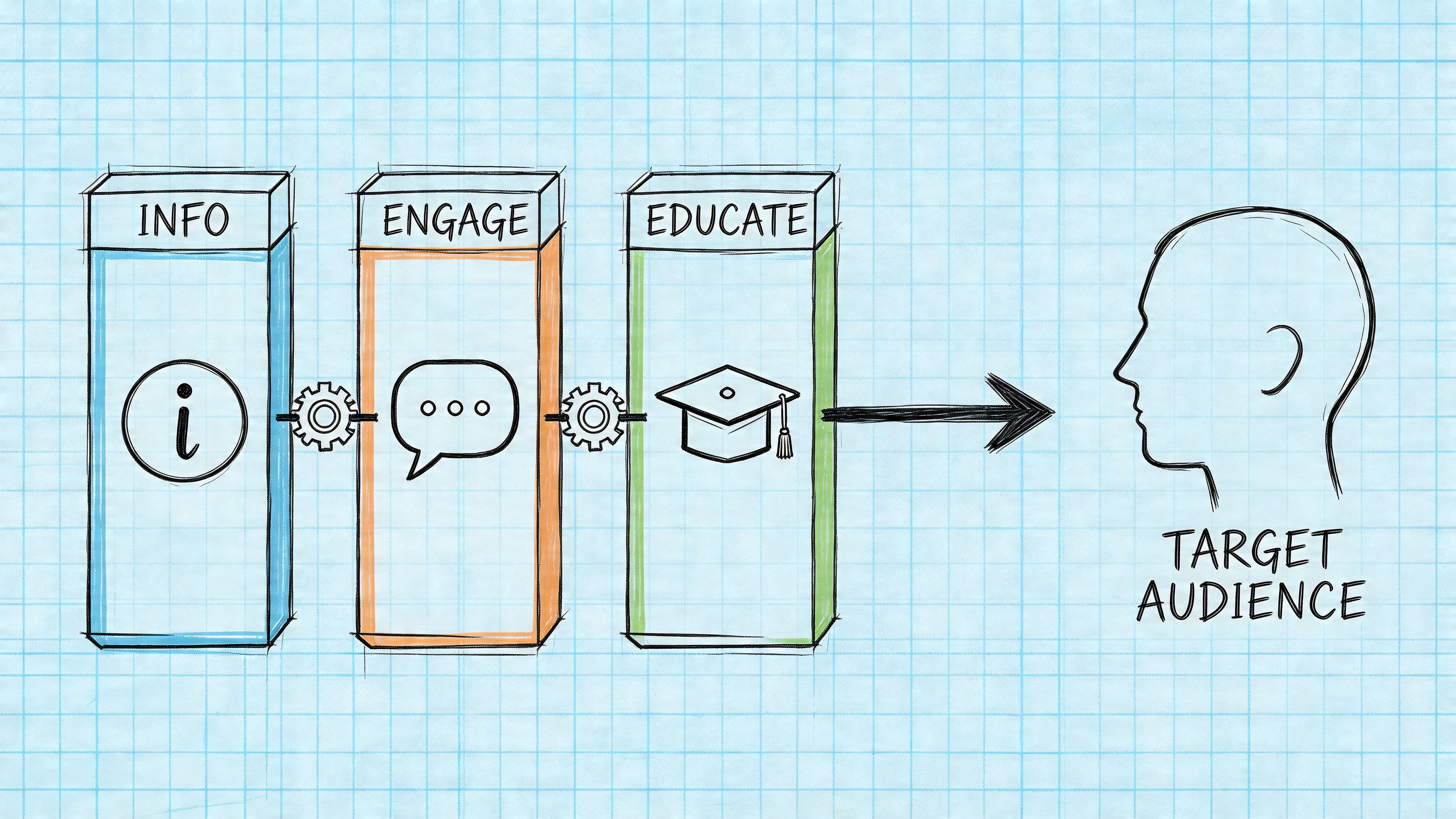
Every strong channel does three jobs: inform (the core thing people came for — fast to scan, immediately useful), educate (the why behind the update, not just the what — breakdowns and frameworks that deepen trust), and engage (polls, binary questions, and short prompts that reduce content risk by surfacing what subscribers care about before you invest in bigger pieces).
Match format to intent:
- Text posts — when the point needs context or a strong narrative arc
- Images and visuals — when the idea is comparative, process-based, or easier to grasp at a glance
- Native video — when tone, demonstration, or face-to-camera trust matters
- Polls — low-friction interaction and fast audience sensing
- Files and documents — templates, checklists, or research people save and revisit
Content pillars are broad themes. Series are what make them publishable. A channel about investing might have pillars like market context and portfolio education, but subscribers return for recurring formats they recognize — a weekly review, a myth-vs-reality post, a tool teardown. That's what builds habit.
Run a 90-Day Learning Cycle
Growth gets easier when you operate in short learning cycles rather than vague monthly intentions.
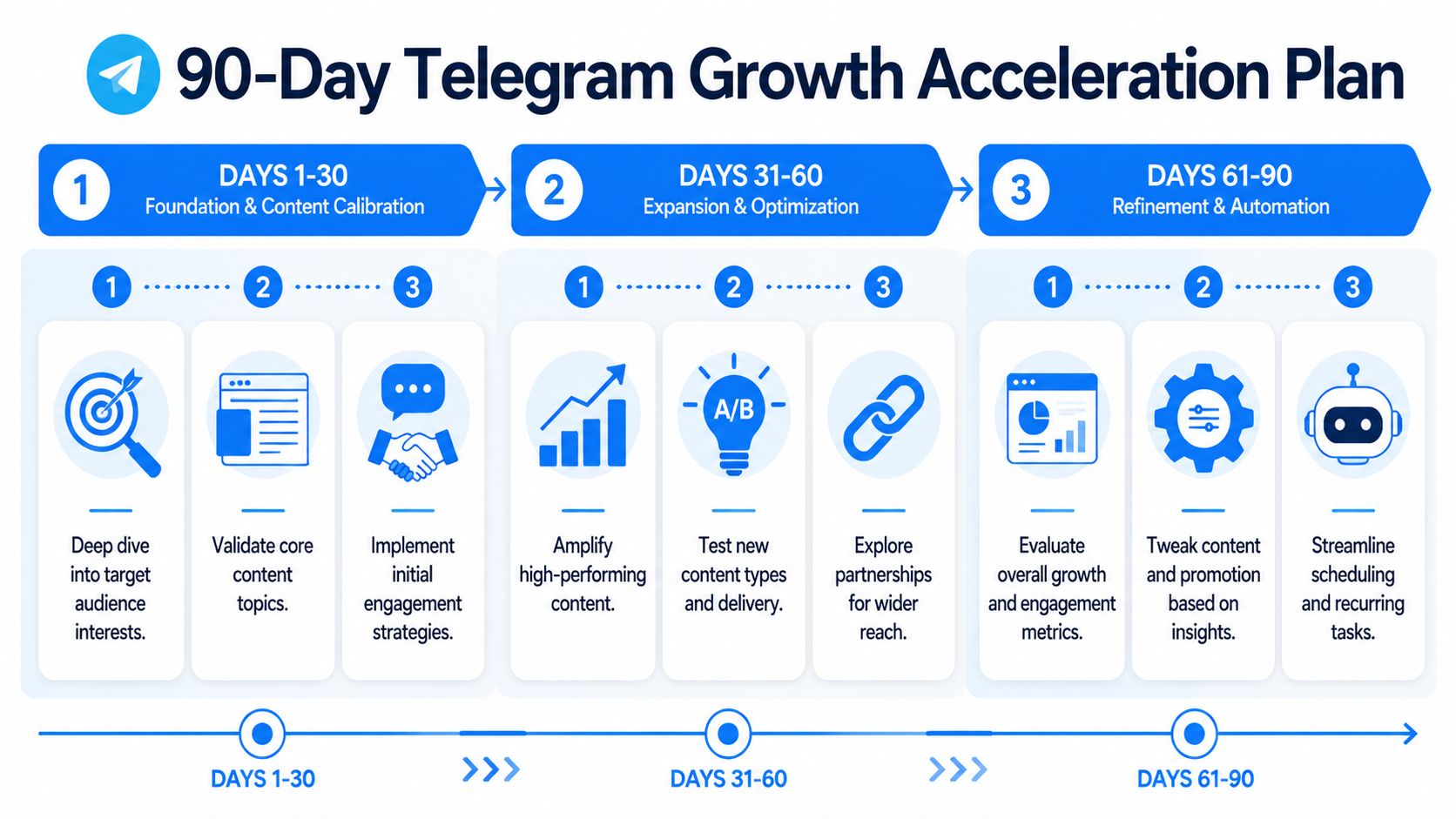
Days 1–30: Build the baseline. Don't chase virality. Map your posting frequency, review content by type, track acquisition moments, and watch retention behavior. Run controlled tests — not random experiments. Test timing (publish similar post types at different windows), packaging (change the lead or first sentence without changing the core topic), and CTA style (ask for a reaction, a reply, or a forward, then compare outcomes).
According to a Telegram analytics roadmap from Postiz, posting at 8–10 PM UTC can boost views by 30%, and channels using iterative analytics loops report 25–40% quarterly subscriber growth.
Public Telegram channel analytics tools let you inspect not just your own patterns but also comparable channels — posting cadence, content clustering, edits, and deletions that often reveal second thoughts or weak post hygiene.
Days 31–60: Scale what works. By now you have enough signal to stop treating every content idea equally. Double down on combinations that perform. If short explainers in your evening slot get stronger reach and better discussion, increase them. If link posts get seen but not shared, repackage them with stronger commentary. For channels that frequently share YouTube content, the YouTube in Telegram guide covers the packaging decisions that make the difference.
This is also where promotion gets more disciplined. Cross-post strong excerpts as teasers on other platforms. Participate usefully in related communities rather than dropping links. Only swap mentions with channels serving adjacent audiences — reach without relevance inflates vanity numbers and hurts retention.
For paid placements, check these before spending anything:
| Checkpoint | Why it matters |
|---|---|
| Audience overlap | Similar readers retain better after joining |
| Posting style | Misaligned tone creates poor expectations |
| Forward-friendly content | New visitors need a strong first impression |
| Post history quality | Inconsistent feeds waste paid traffic |
Days 61–90: Optimize for efficiency. Document repeatable plays. Which topics deserve a recurring series. Which time windows consistently outperform. Which promotions bring subscribers who stay. Which CTAs feel natural and still move behavior.
Reduce complexity. You don't need ten content experiments running at once. You need a tighter system that lets a small team publish reliably, review outcomes, and adjust quickly — the same editorial discipline behind a Telegram channel newsletter. A strong month-three setup has a stable weekly publishing rhythm, two or three repeatable series, a shortlist of proven promotion channels, and a record of what changed before every spike or drop.
Use Analytics to Make Decisions
Analytics only help if they change your decisions. Too many admins collect screenshots of graphs and still don't know what action to take next.
Views indicate reach quality. Forward behavior indicates shareability. Growth trendlines show whether content and promotion are attracting the right subscribers or just temporary attention.
According to BrandGhost's benchmarks, channels in the 500–5,000 subscriber range should target 40–60% view rates, 1–3% forward rates, and under 3% weekly unsubscribes. Early growth often looks explosive then slows. That's normal. Mature growth depends on relevance and retention, not volume.
Treat forward rate as a decision metric. Views tell you reach. Forwards tell you whether a post can drive organic acquisition. Which content themes create peer-to-peer sharing? Which post structures trigger referrals without direct asks? Which topics attract passive viewers but no growth? This guide to social media analytics and reporting applies the same discipline most Telegram admins skip: connect metrics to actions, not dashboards.
Statiko tracks message edits and deletions with timestamps and original content, shows daily subscriber snapshots you can read as subscriber count history, and supports channel comparison and AI-assisted pattern analysis. An edit isn't just a correction — it can signal weak framing, compliance pressure, rushed publishing, or attempts to rewrite a poor post after the fact. Use that to review your own publishing workflow, inspect competitor deletions for failed experiments, and check content history before committing to partnerships.

Build Community Around the Channel
Subscriber growth is acquisition. Community is retention. Neglect the second and the first gets expensive fast.
The channel is the broadcast layer. Stickiness comes from what happens around it — replies, feedback loops, moderation quality, and the feeling that people inside are paying attention.
Give the discussion space one clear job. Don't open a group just because community matters. Prompt conversations rather than waiting for organic replies. Enforce rules consistently — members stay where moderation is visible. This overview of community building makes the point clearly: communities don't grow from access alone; they grow from repeated, structured interaction.
Use your discussion space as a research stream:
| Signal | What it suggests |
|---|---|
| Repeated questions | A missing explainer or onboarding post |
| Debates around one topic | High-interest material worth turning into a series |
| Silence after certain posts | Weak relevance or poor framing |
| Member-to-member help | A topic with real community value |
Spam, low-effort negativity, and off-topic drift erode trust quickly. The faster the group grows, the more you need systems. A Telegram channel bot can structure moderation and recurring actions without turning the space into chaos.
Frequently Asked Questions
How long does it take to grow a Telegram channel? Depends on niche, distribution sources, and whether content gets forwarded. New channels often grow quickly if they have a clear promise and access to an existing audience, then slow as easy wins disappear. Don't judge by one spike — judge by whether good posts keep attracting the right subscribers.
Should I focus on subscriber count or engagement first? Engagement first. Subscriber count without retention is a number, not an audience. Watch views, reactions, discussions, and forwards — those behaviors tell you more than raw growth.
Do paid promotions work? Only when the destination is ready. Vague description, weak pinned post, inconsistent recent content — paid traffic exposes those problems faster; it doesn't fix them. Test paid placements after your content system is stable enough to convert interest into repeat attention.
What should I do when growth stalls? Don't post more immediately. Audit the basics first: timing, topic mix, opening lines and caption structure, and whether subscribers are being retained after joining. Stalls usually come from mistimed posts or content that has drifted from the original promise.
Channel only, or channel plus group? Usually both, once there's enough audience interest. The channel handles distribution. The group handles retention, feedback, and social proof. Open the group when you can actively seed and moderate it — an empty group weakens perceived momentum.
How often should I post? The highest frequency you can sustain without lowering quality. Consistency helps subscribers form a habit. Measurement tells you the cadence your audience actually wants.
Conclusion Stop Guessing and Start Growing
If you want to know how to grow Telegram channel reach in a way that lasts, stop looking for tricks. The channels that keep compounding define a narrow audience promise, publish within a structured content system, and review performance with enough transparency to see what changed.
That's the difference between posting and operating.
Generic tactics still have a place. Cross-promotion, partnerships, and paid placements can all help. But none of them rescue a channel that doesn't understand its own metrics. If you can't identify which posts earn attention, which earn forwards, and which changes hurt retention, growth stays fragile. If you're looking for the operational foundation before pushing for growth, how to use Telegram channels covers setup, content systems, automation, and analytics in one place. If your channel is news-focused, this guide to Telegram news channels covers the editorial and transparency practices that separate credible news feeds from the rest.
The practical path is straightforward. Build your positioning. Create repeatable series. Track timing, views, forwards, and retention. Study competitor patterns. Review edits and deletions instead of ignoring them. Then use those signals to make the next cycle better than the last.
If you want a clearer view of what's happening inside public Telegram channels, Statiko gives you transparent analytics, content history, edit and deletion tracking, and channel comparison tools that support a more measurable growth process.
Related posts

Unlock growth with our guide to Telegram channel analytics. Learn to track key metrics, analyze competitors, and make data-driven decisions for your channel.

Discover how to create telegram channel for 2026. Our guide covers setup on mobile/desktop, public vs. private, first posts, and analytics for growth.

A practical guide to Telegram channel monetization in 2026 — covering sponsored posts, affiliate marketing, paid subscriptions, pricing, and analytics.
Start in seconds.
Create a free account to organise channels, track activity, and get recaps delivered to you.
Real-time. Telegram. Analytics.