How to Use Telegram Channels: A Master Guide for 2026
Master how to use Telegram channels with our 2026 guide. Learn setup, growth strategies, and advanced automation to build an influential audience.

Most Telegram channel failures are an operating model problem, not a content problem. The channels that become influential don't just post more — they set up for discoverability, publish on a schedule, track what changes, and study competitor patterns instead of guessing.
A public channel can be a media property, a research feed, a brand publication, or a distribution layer for a product. It only works that way if the structure is clean and the workflow is disciplined.
Laying the Foundation for a Professional Channel
A channel often looks fine on day one and starts failing by day thirty. The name is too broad, the link changes, the bio says almost nothing, and readers can't tell whether this is a media feed, a community hub, or a dump for updates.
Public or private — this first choice shapes everything. Choose public if the goal is reach, search visibility, sharing, and third-party analysis. Choose private if access control matters more than discovery. Private channels are harder to cite, harder to audit, and invisible to tools that track post history, edits, deletions, and audience movement over time.
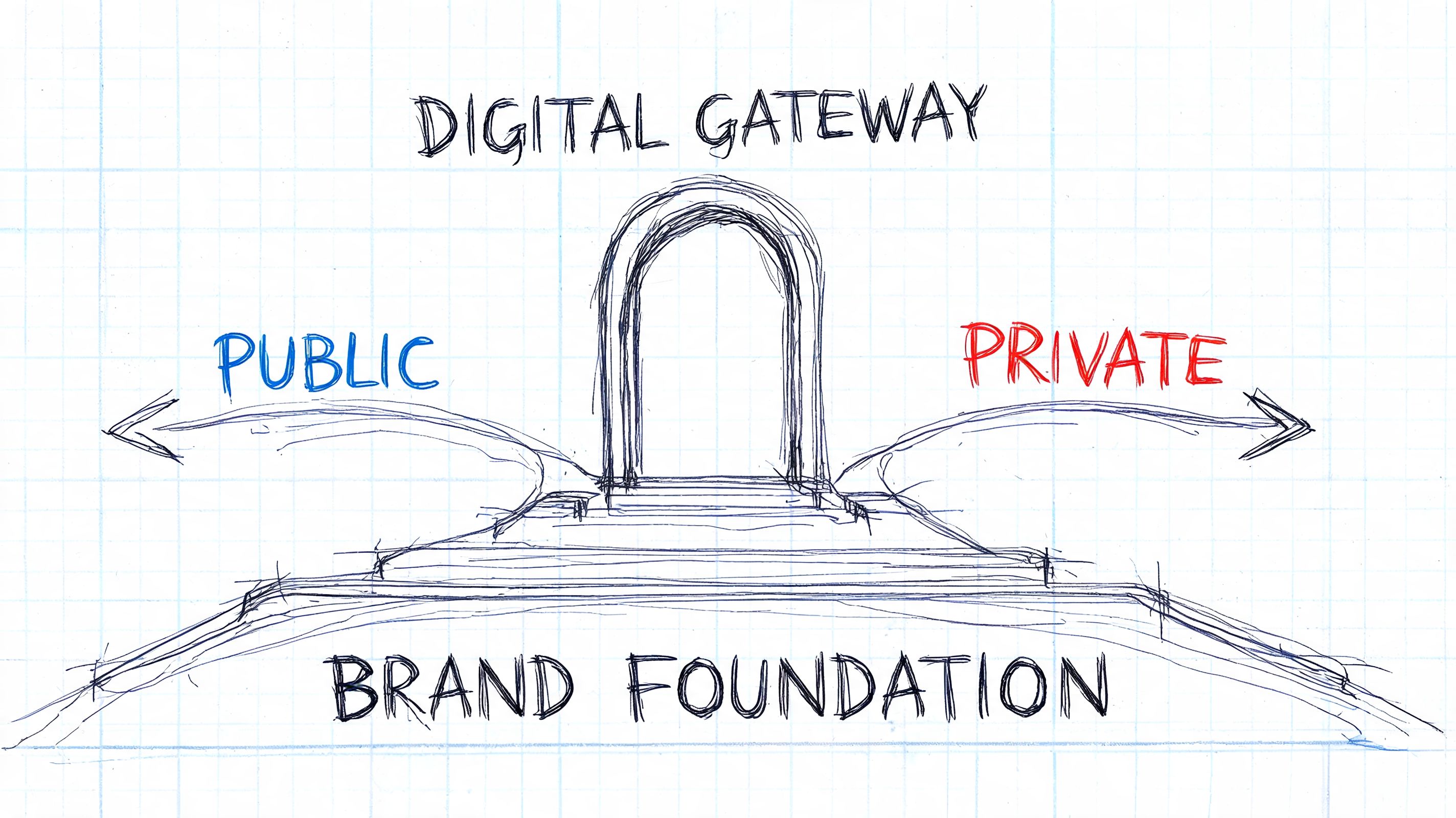
Username — pick it early and treat it as long-term infrastructure. Telegram allows 5 to 32 characters. Changing it later breaks old mentions, damages referral tracking, and fragments your analytics history. A recognizable profile image matters too — forwarded posts travel without context, so the visual identity needs to work on its own.
If you're still deciding on format, what a Telegram channel is covers the plain-language distinction between channels, groups, and chats. If you haven't built one yet, start with how to create a Telegram channel.
Bio and pinned post — admins treat the bio as a one-time field. That leaves useful classification data on the table. State the topic, audience, and posting angle in plain language, then reinforce it in the first pinned post with recurring themes, content rules, and disclosure standards. A strong pinned post covers: who the channel is for, what readers get, posting frequency, content categories, and whether ads or sponsorships appear.
That last point matters more than most admins admit. If sponsored posts are later edited or deleted without a clear policy, outside observers can spot the inconsistency — and on public channels, transparency is part of reputation management.
Linked discussion — channels with a linked group sustain higher follower retention than channels that ban discussion entirely, but the trade-off is operational. News feeds, executive channels, and research publications often need tighter control because low-quality replies bury useful feedback and create daily moderation work. Education, market commentary, and creator communities usually benefit more from discussion because comments reveal content gaps and repeat questions worth addressing. Define who moderates, what gets removed, whether links are allowed, and how fast admins respond before opening comments.
| Decision area | Weak setup | Strong setup |
|---|---|---|
| Visibility | Private by default | Public with stable link |
| Identity | Generic name and bio | Clear niche and recognizable branding |
| Classification | Bio only | Bio plus pinned post tags and disclosures |
| Discussion | Comments enabled without rules | Linked group with moderation policy |
A clean foundation doesn't create growth by itself. It gives you a channel that can be measured, compared, and improved without guessing.
Mastering Content and Automation
One late post is forgivable. A week of irregular publishing, inconsistent formatting, and unclear ownership makes readers assume the channel is a side project. That's usually a workflow problem, not a content problem.
Data from Onlypult's guide to working with a Telegram channel links structured scheduling and bot-assisted publishing with stronger consistency — and notes that channels often run into failed scheduled posts when bot permissions are set up poorly. Channels that rely on manual posting drift on timing, format, and voice, which makes performance harder to measure accurately.
Publishing pipeline — set it up so one person can run it today and a team can inherit it later. Create a dedicated bot through @BotFather to separate publishing from your personal admin account. Add it as channel admin with the right permissions (scheduling failures often trace back to incomplete bot access). Connect it to a scheduler, standardize post templates by type, and log edits and deletions. On Telegram, silent post changes create trust issues if readers notice them before you explain them. If your process includes interviews, voice notes, or live discussions, this transcription workflow shows one practical way to turn recordings into searchable channel content inside Telegram. For the full bot setup, using a Telegram channel bot covers permissions, automation rules, and reducing manual work.
Post format — lead with the point. Put the value in the first line. Use bold sparingly (one strong signal beats a paragraph full of emphasis), italics for interpretation or caveats, and one descriptive link rather than a stack of raw URLs. Short paragraphs and visible spacing keep mobile posts readable. Writing Telegram posts like blog intros — long setup, delayed payoff — is the most common format mistake.
Templates, not canned posts — use recurring post types so readers recognize the structure while the substance stays fresh. Good templates also make analysis cleaner. If every research post follows one structure and every promo post follows another, you can compare like with like and separate weak topics from weak packaging.
| Post type | What it should do |
|---|---|
| Announcement | Deliver one clear update with one action |
| Research thread | Explain a claim, then support it with evidence |
| Curated roundup | Save readers time by summarizing multiple items |
| Promo post | Make the offer explicit and disclose the commercial angle |
Improvising every post from scratch slows production, weakens voice consistency, and makes the analytics useless — you've changed too many variables at once.
Strategies for Sustainable Channel Growth
The usual "promote everywhere" approach optimizes for exposure, not fit. That's why it fails. Most mainstream creator guidance offers little help on subscriber retention, edit tracking, or posting-frequency analysis. A strong Telegram audience is built from people who already care about the topic, not people who clicked once because of a giveaway.
Chase alignment, not subscriber counts. Where do your ideal readers already gather? Which adjacent channels serve the same audience with a different angle? What kind of post would someone forward because it helps them look useful to others? When growth is healthy, new subscribers already understand the channel's purpose before they arrive — they've seen a forwarded post, a mention from a trusted source, or discussion around your content. For one niche broken down this way, see how Telegram channels for music discovery split into editorial feeds, artist channels, and curators, each with a different cadence and trust profile.
Cross-promotion works when there's editorial logic behind it. A finance channel can collaborate with a legal commentary channel. A product update channel can swap mentions with a technical education channel. Weak cross-promotion usually has one of three problems: audience mismatch, no context around the recommendation, or a low-quality landing experience after the click. If someone lands on your channel and sees inconsistent formatting, no pinned post, and random topic drift, the promotion was wasted.
For teams thinking beyond simple posting and into broader operational systems, advanced automation for SaaS product teams applies the same logic: good automation protects consistency, it doesn't replace strategy.
Build retention into the channel itself. Create recurring formats — weekly recaps, monthly research posts, or a named series give people a reason to stay. Make your best posts forwardable. Keep promises about scope. The first thousand committed subscribers matter more than a larger audience that barely recognizes your voice.
More detail on this in how to grow a Telegram channel.
Measuring What Matters with Advanced Analytics
A public channel can look healthy on the surface. Posts go out on time, view counts seem respectable, subscriber numbers inch upward. Then growth stalls and nobody can explain which posts drove subscriptions, which ones only collected passive views, or why a competitor with a smaller audience gets shared more often.
Native Telegram stats answer basic operational questions — view patterns, subscriber movement, sharing activity, audience activity windows. That's enough to know whether yesterday's post outperformed the weekly baseline. It's not enough for serious editorial review.
A professional channel needs post history, publishing accountability, and category-level comparison against competitors. Native analytics don't show how often a channel edits after publication, whether deletion is a recurring habit, or how your output stacks up against competing channels. According to Onlypult's breakdown of Telegram built-in statistics, access rules for native stats have shifted over time — smaller operators often spend their earliest growth stage with limited visibility.
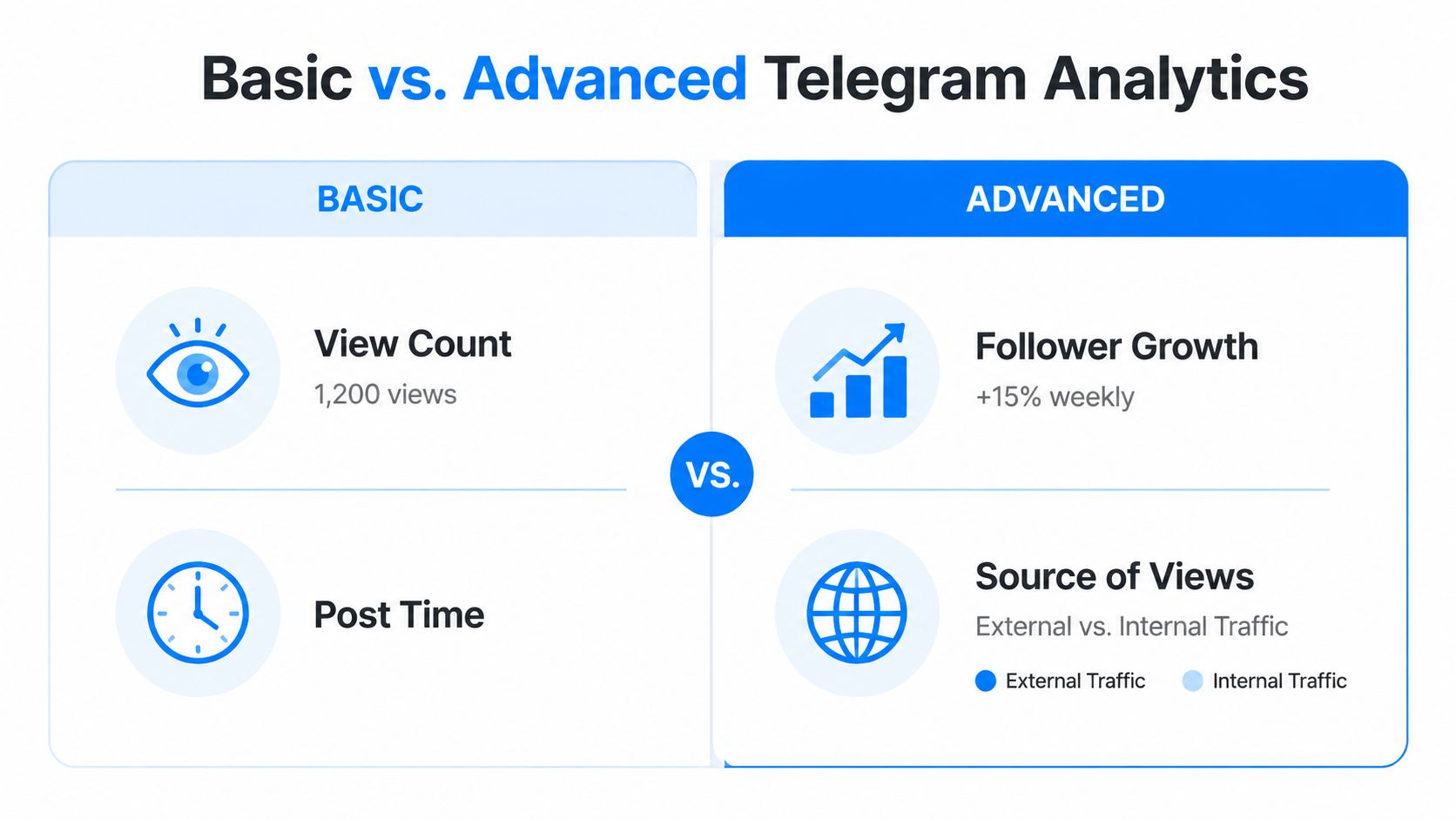
Third-party tools changed Telegram from a closed reporting environment into a field where public channels can be compared and audited. Popsters' overview of Telegram analytics describes an ecosystem where external platforms track large sets of public channels, monitor engagement patterns, and surface benchmarks for views, reactions, and forwards.
Instead of asking whether a post performed well in isolation, ask sharper questions: Did it outperform your median for that format? Did a spike in views come from timing, topic selection, or a mention from another channel? Did subscriber growth hold for several days, or was it a one-post bump?
Statiko adds what native stats don't cover — edit and deletion history with timestamps, growth and engagement snapshots, and cross-channel comparison for public channels. It helps teams audit publishing discipline, review what changed after a post went live, and benchmark against competitors. You can search and compare public channels directly at statiko.io/catalog/search.
Measure transparency, not just reach. If a channel edits headlines after backlash, deletes weak posts, or rewrites pinned positioning, that behavior affects credibility as much as raw traffic does. Signals worth tracking: edit frequency (revisions are normal; repeated post-publication changes to framing deserve review), deletion patterns (routine deletion distorts performance analysis and damages trust), pinned-post consistency (frequent rewrites signal weak editorial discipline), and response behavior in discussion threads.
Competitor analysis — study competitors at the level of systems, not aesthetics. Publishing rhythm, topic sequencing, format mix, edit discipline, and forwarding behavior are all testable inside your own operating model. A polished voice is easy to notice and usually hard to replicate.
| Signal | What to study |
|---|---|
| Posting rhythm | Which days and time windows appear deliberate |
| Topic clustering | What themes repeat and in what sequence |
| Format choices | Long analysis, short alerts, image-led posts, multi-post threads |
| Share behavior | Which posts seem built for forwarding |
| Edit history | Whether the channel publishes cleanly or revises often |
Benchmarks help, but context matters more — a market-news channel and a private equity research channel shouldn't be judged by the same distribution pattern.
Navigating Legal and Privacy Responsibilities
A public channel creates publisher-level exposure long before it looks like a media business. Serious operators plan for that early. Legal and privacy work protects distribution, advertiser trust, and your ability to maintain an archive people can rely on.
Copyright — if you didn't create the media, assume you need permission, a license, or a clear fair-use basis. Credit sources clearly, add original context, store proof of approvals for guest content and paid visuals, and check forwarded content before reusing it. A casual repost may pass unnoticed in a small channel. In a growing public channel, it can lead to takedown requests, payment disputes, or a pattern of distrust from creators who see their work stripped of context.
Discussion data — subscribers may post phone numbers, private messages, accusations, medical details, or workplace documents in replies. Set rules in advance: what gets removed, who reviews reports, how fast moderators respond, and what gets documented. Keep a simple incident log — what was removed, why, and whether the user was warned or banned. That record helps if a dispute appears later and keeps moderation decisions consistent across the team.
Commercial disclosure — ads, affiliate links, paid recommendations, and sponsored placements should be labeled in the post itself. Readers shouldn't have to infer commercial intent from tone or formatting. Keep paid placements visually distinct from editorial posts, approve only offers you can explain to subscribers, and log what was paid, what was published, and what changed after publication.
Edits are visible. Deletions raise questions. If a sponsored post is revised after complaints, or if claims disappear without explanation, attentive subscribers will notice. Include revision patterns in your content audits alongside reach and engagement — track them alongside reach, engagement, and growth using a tool like Statiko.
Frequently Asked Questions
Should I use a channel or a group? Channel if you need controlled publishing, a consistent editorial voice, and a clean archive. Group if discussion is the product. Serious operators often run both — the channel publishes the official feed, the linked group absorbs questions and community noise without weakening the main timeline.
What's the right posting frequency? The one your team can maintain without lowering the standard. A research channel publishing three strong posts a week can outperform a daily channel full of filler. If posting volume rises, watch for weaker saves, forwards, or discussion quality — that usually signals format drift before subscriber growth slows.
How do channels usually make money? Sponsorships, affiliate recommendations, paid communities, consulting, lead generation, or using the channel to support a broader business. The better question is whether the revenue model matches the channel's promise. A market analysis channel can sell research without surprising subscribers. A public-interest news channel that suddenly pushes unrelated affiliate offers usually damages trust faster than it adds revenue.
Should I delete weak posts? Usually no. A messy archive is often less harmful than a suspicious one. Edit and leave the history intact for typos and weak framing — Telegram shows that record, and an honest correction can work in your favor. Delete only for legal exposure, safety issues, compliance problems, or serious factual errors that can't sit in public even with a correction. Routine cleanup also makes performance analysis harder because you erase evidence of what failed.
When should I start caring about analytics? Day one. Set naming rules for content formats, track publish times, and separate commentary, news, promotions, and experiments so you can review them later. If you wait until growth stalls, you end up with noisy data and no baseline. Professional channel management starts with clean inputs, not better reports.
If you run a public Telegram channel and want clearer visibility into growth, edits, deletions, and publishing patterns, Statiko is worth reviewing. It's built for public-channel transparency and analytics, which makes it useful for creators, marketers, researchers, and teams that want to manage Telegram with more discipline and less guesswork.
Related posts

Discover how to create telegram channel for 2026. Our guide covers setup on mobile/desktop, public vs. private, first posts, and analytics for growth.

Master how to grow telegram channel using our proven 2026 framework. Get actionable steps for content, promotion, and analytics for rapid growth.

Unlock growth with our guide to Telegram channel analytics. Learn to track key metrics, analyze competitors, and make data-driven decisions for your channel.
Start in seconds.
Create a free account to organise channels, track activity, and get recaps delivered to you.
Real-time. Telegram. Analytics.