The 8 Core Benefits of Telegram for 2026
Explore the key benefits of Telegram for channel operators and analysts. Learn about privacy, bots, massive reach, and how to verify it all with data.

Telegram now functions as a primary distribution system for many operators — announcements, research, media libraries, education, community messaging. It's not a secondary chat app anymore.
The relevant question isn't which features exist. It's which benefits create observable gains in reach, efficiency, or content durability — and how to verify them. Native tools offer limited visibility into what changed or disappeared over time. That gap is worth understanding before investing, as covered in Kenscio's discussion of Telegram's business advantage.
If you need a format baseline first, Statiko's guide on what a Telegram channel is is a good starting point. Teams already running structured social media content planning can apply the same discipline here.
1. Scalable Public Channels and Broadcast Reach
Public channels give you direct access to subscribers without competing against a ranked feed. Performance depends on subscriber quality, posting cadence, and topic fit — not an algorithm.
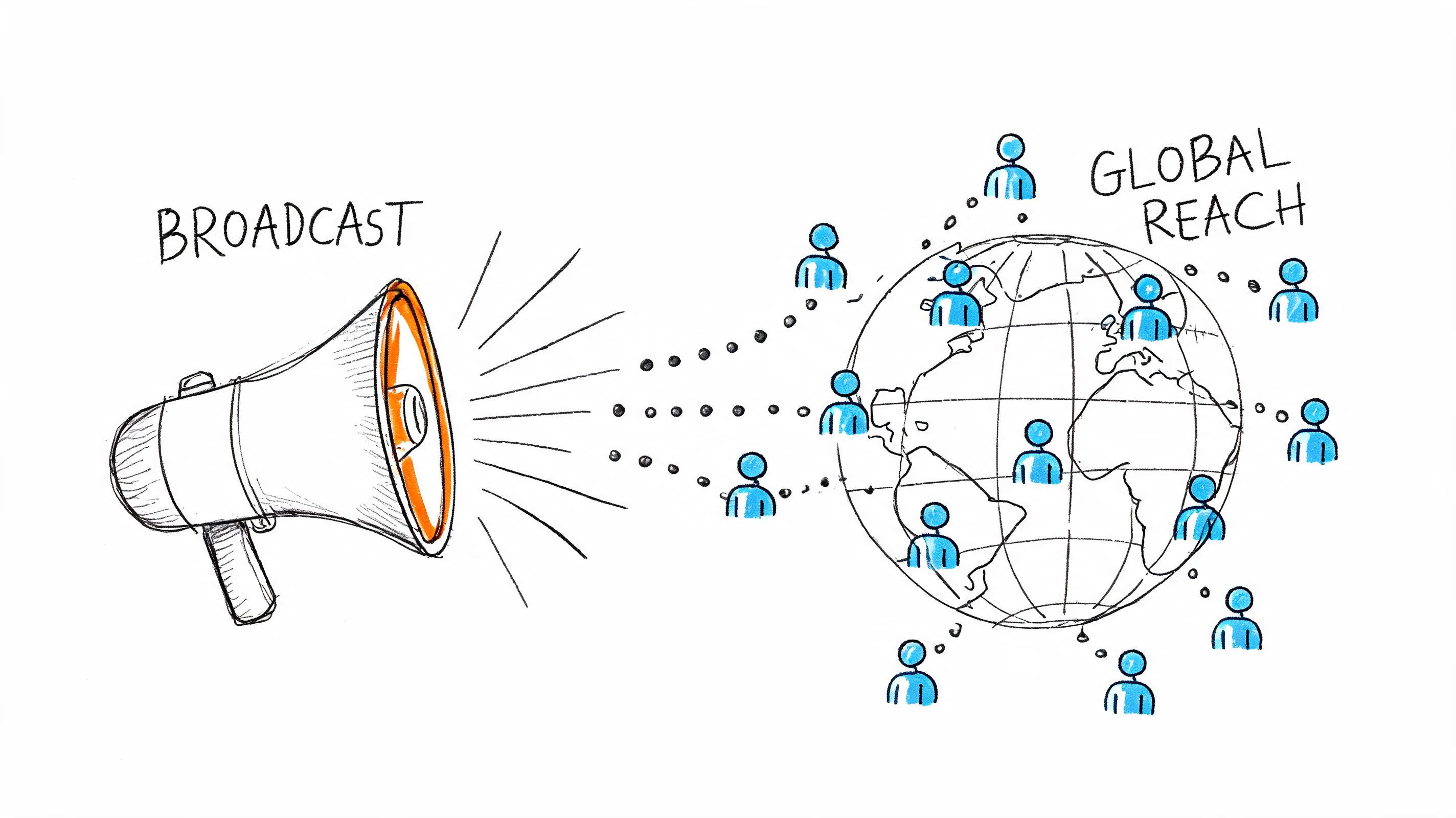
Channels also function as visible archives. Prospective subscribers can review past posts and gauge consistency before joining.
Three indicators matter more than subscriber count alone: subscriber growth, median views per post, and view decay by posting window. A channel gaining subscribers while median views flatten may be attracting low-fit audiences or posting too often.
Telegram's native surfaces don't show much historical context — especially edits, deletions, or reach changes after format shifts. That's where Statiko helps: operators can verify whether broadcast reach is compounding or just growing at the subscriber level.
2. Advanced Privacy and Encryption
Telegram's privacy model is real but layered. Public channels are public by design. Secret Chats are for end-to-end encrypted one-to-one conversations. Confusing the two creates false confidence inside teams.
You can hide phone numbers, use usernames, add passcodes, and keep sensitive exchanges in Secret Chats. Public distribution and private protection coexist — they just solve different problems. This overview of what makes Telegram distinct covers the anonymity controls in detail.
For analytics workflows, the boundary matters practically. Statiko's coverage is limited to public channels — private chats, groups, and direct messages stay private. If your team uses Telegram for both publishing and sensitive coordination, keep those workflows separate. Anonymous Telegram chat handles the confidential side.
One point that often gets missed: privacy without accountability creates trust problems in public discourse. If a channel edits or deletes claims without a visible trail, followers lose context. That's why edit and deletion tracking is strategically important for public-channel analysis.
3. Cloud-based Message Sync and Storage
Telegram's cloud architecture makes posts into a persistent archive, not just transient notifications. That's useful for channels publishing reference material, recurring updates, or media libraries — a searchable back catalog reduces repeated support questions and gives new subscribers context immediately.
The strategic issue is that cloud convenience can obscure revision history. If a post is edited, the current version becomes the only visible record.
Educational channels — students revisit older lessons, so terminology edits affect archived usefulness. Market commentary — a prediction revised after the fact needs provenance if readers are evaluating accuracy. Brand channels — product information may change, but support teams need to know what subscribers originally saw.
Pair Telegram's storage with historical monitoring: not just what you posted, but whether the archive remains stable and trustworthy over time.
4. Bots and Automation Ecosystem
Bots extend Telegram beyond messaging into workflow design — publishing, moderation, routing, notifications, data collection. No standalone app required.
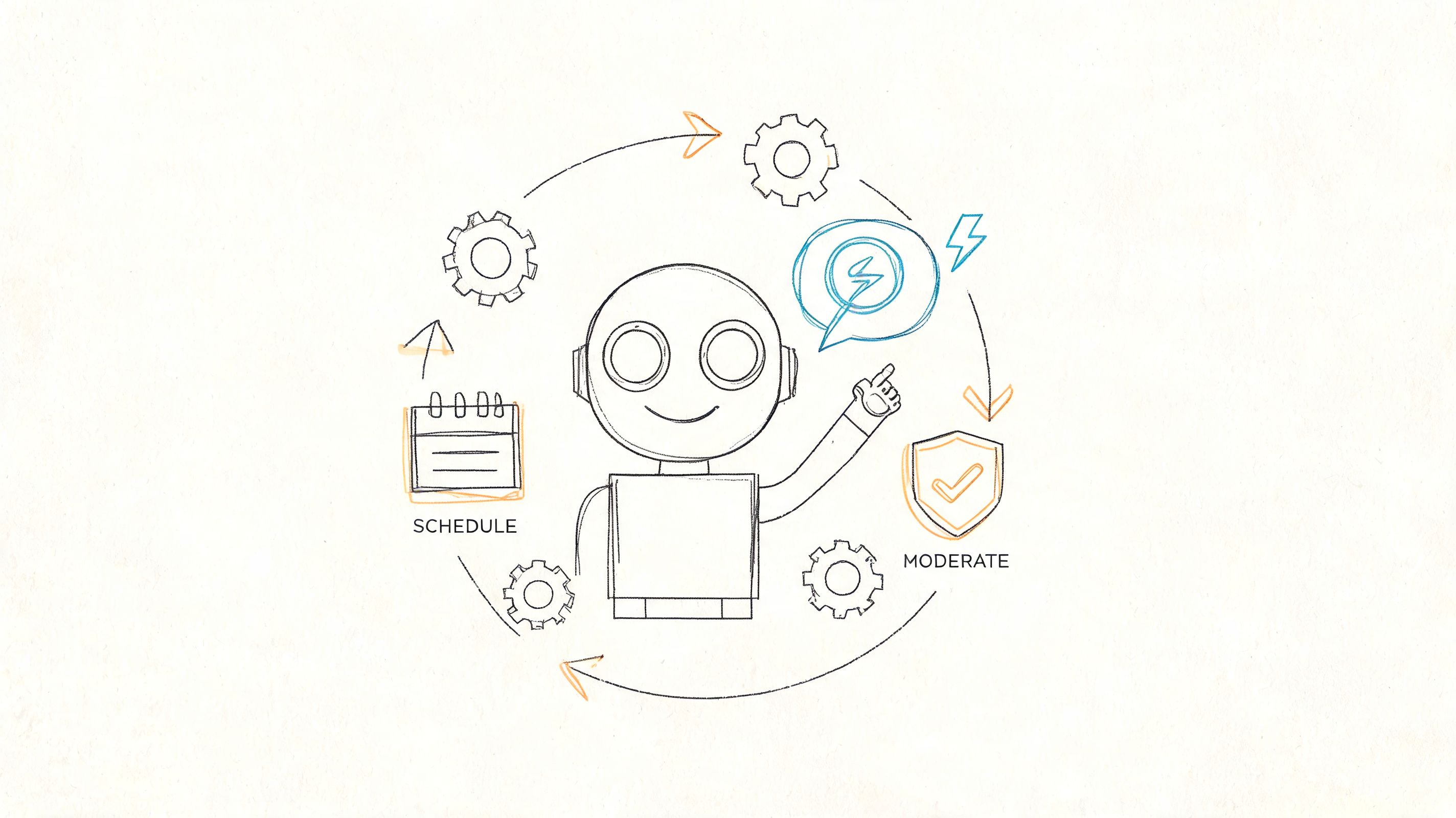
Used badly, bots flood channels with low-value output. Used well, they reduce operational drag and improve consistency. The difference is whether you treat automation as a system with measurable outcomes. Statiko's explainer on what a Telegram bot is outlines the operating model.
The key metric isn't bot activity — it's content quality after automation. If scheduling or moderation bots help you post on time and keep format consistency, you should see cleaner engagement patterns and fewer admin tasks.
- Start with one repetitive task: Scheduling, moderation, or FAQ handling is a good first win
- Log outputs: Keep a record of what the bot published or removed so admins can review false positives
- Pair with analytics: Posting automation matters only if it supports better view patterns or steadier cadence
Teams exploring streamlining Telegram project workflows often find the benefit is reduced fragmentation, not just speed.
5. Rich Media and Large File Sharing
Telegram handles files up to 2 GB, making it practical for educators, gaming communities, and researchers distributing substantial assets. A channel can function as a publishing layer, asset hub, and searchable distribution archive at the same time.
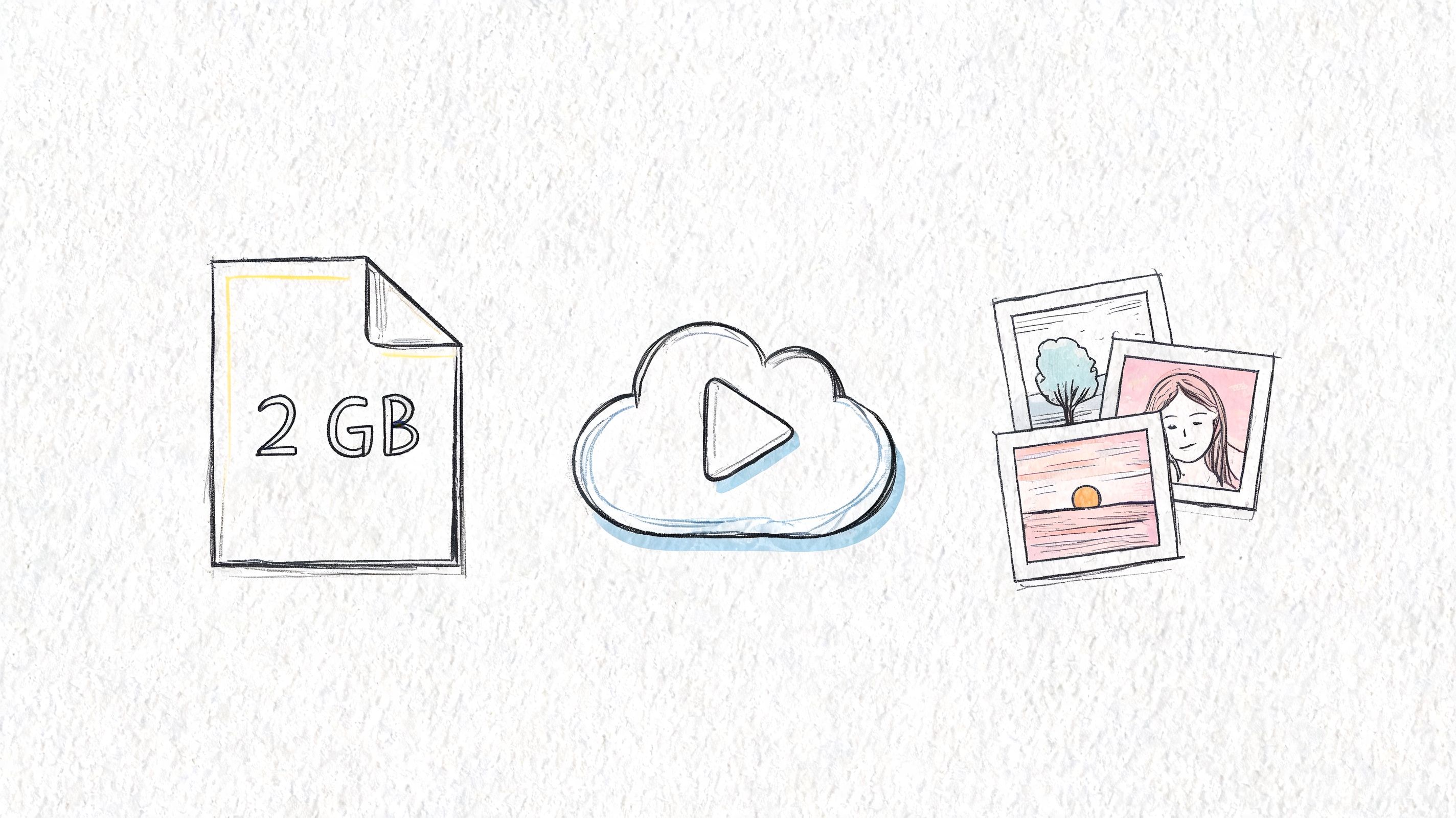
Content performance often depends on packaging, not just the file itself. A labeled asset with a strong caption and clear follow-up post consistently outperforms a silent upload.
Name files descriptively — improves retrieval and reduces support questions. Add a framing caption — tell subscribers why the file matters and what to do with it. Measure downstream behavior — track which file types attract replies, forwards, or return visits to the channel archive.
The benefit isn't file transfer. It's combining storage, discovery, and communication in one subscriber experience.
6. Open API and Third-party Integrations
API access matters when Telegram is part of a larger system. Distribution, moderation, lead capture, support workflows, and analytics can all connect — channel activity becomes easier to verify and improve.
A publisher can send approved posts from a CMS into Telegram, log publication times in an analytics layer, push lead events into a CRM, and archive edits for auditability. Telegram advertising costs range from €0.02 to €0.40 per click — 50–90% lower than Google or Facebook in some contexts, per Magnetto's Telegram by the numbers report. Lower distribution costs justify investment in tracking and workflow instrumentation. For broader context on how APIs fit into content operations, unlocking social media data and automation is worth reading.
The mistake is treating integration success as a technical checkbox. A working webhook only proves data moved once.
Three metrics that matter more:
- Content lag: Time between source approval and Telegram publication — if integrated posts consistently publish slower than manual ones, the workflow adds friction
- Failure rate by workflow: Send errors, broken formatting, duplicates, missed triggers — identifies which automations are safe to scale
- Performance delta: Compare integrated posts against manually published posts by view velocity, forwards, or reactions. Statiko makes post-level performance transparent enough to verify whether automation preserves quality or reduces it
7. Interactive Engagement Tools
Polls, quizzes, reactions, and comment threads produce first-party signals that go beyond view counts. Views show exposure. Interactive responses show how subscribers interpreted what they saw.
The practical question isn't whether these tools exist. It's whether they improve decisions. A poll with heavy participation that leads to weak views on the winning topic signals stated preference bias — subscribers say they want one format, then engage more with another.
Use polls to test demand — compare poll winners against actual performance of follow-up posts. Use quizzes to measure comprehension — useful for educational or onboarding channels. Review comments for failure patterns — repeated clarification requests identify weak framing faster than aggregate metrics.
Avoid reading engagement at face value. High reaction counts can mean agreement, novelty, or outrage. Comment volume can indicate strong community participation or an incomplete original post. The signal becomes useful only when compared against return engagement, forwards, and consistency across similar posts. Statiko helps here by letting operators compare interactive posts against standard posts by view velocity and forward rate.
8. Speed, Reliability and Performance
Speed changes the value of a messaging channel. An update that reaches subscribers while the decision window is still open can shape behavior. The same message arriving late becomes background noise.
That distinction matters for alerts, market commentary, incident updates, and live coverage. Telegram delivers posts directly to subscribers inside a broadcast-format channel — no ranked discovery layer.
Fast delivery affects outcomes you can track. Measure views in the first 5, 15, and 60 minutes after publication and compare those intervals across content types. A breaking alert should produce a different early-view curve than a general update. If it doesn't, the issue is packaging or audience conditioning — not platform performance.
Reliability has editorial value. Subscribers return to channels differently when they trust time-sensitive posts will appear promptly. That behavior turns a channel into a reference point during fast-moving events. Alert channels, field operations, and reputation management teams all depend on it.
Keep urgent posts compact. Put the decision-relevant fact in the first line. A shorter first post followed by a clarifying second often outperforms a polished but slower single update.
One more check: if posts labeled urgent don't produce stronger early-view velocity than standard updates, the audience may no longer treat those signals as time-sensitive. That's a message calibration problem, not a platform one.
Telegram Benefits — 8-Point Comparison
| Item | 🔄 Implementation Complexity | ⚡ Resource Requirements | 📊 Expected Outcomes (⭐) | 💡 Ideal Use Cases | ⭐ Key Advantages |
|---|---|---|---|---|---|
| Scalable Public Channels & Broadcast Reach | Low, channel setup is simple; audience segmentation and posting discipline still matter 🔄 | Low, content production and scheduling are the main inputs ⚡ | Broad distribution, persistent post history, and observable reach patterns 📊 ⭐⭐⭐ | Announcements, news distribution, product updates, public alerts 💡 | Unlimited subscribers, centralized publishing control, auditable message history |
| Advanced Privacy & Encryption | Moderate, privacy settings must be configured intentionally; Secret Chats do not extend to channels 🔄 | Low, little infrastructure required beyond policy and user training ⚡ | Strong one-to-one confidentiality, but limited encryption benefits for public broadcasting 📊 ⭐⭐ | Sensitive direct conversations, source protection, internal coordination in narrow cases 💡 | Secret Chats, 2FA, self-destruct controls, identity protection options |
| Cloud-based Message Sync & Storage | Low, cloud sync is built in; archive structure needs active management 🔄 | Low, Telegram handles storage, but teams still need taxonomy and naming rules ⚡ | Smooth cross-device access, full archives, and searchable content reuse 📊 ⭐⭐⭐ | Remote teams, knowledge libraries, editorial archives, training materials 💡 | Cloud storage, instant sync, search across message history |
| Bots & Automation Ecosystem | High, development and security review are usually required 🔄 | Medium to High, engineering time, hosting in some cases, maintenance, and monitoring ⚡ | Scaled moderation, scheduled workflows, automated replies, and service logic 📊 ⭐⭐⭐ | Moderation, lead routing, publishing workflows, data collection, service bots 💡 | Bot API, inline interactions, payments support, always-on task execution |
| Rich Media & Large File Sharing | Low, uploads are straightforward; asset formatting still affects usability 🔄 | Medium, production bandwidth and file management increase with richer content ⚡ | High-quality content delivery for long-form media, reference files, and reusable assets 📊 ⭐⭐⭐ | Courses, media libraries, software distribution, research materials 💡 | Large file support, previews and streaming, albums for grouped content |
| Open API & Third-party Integrations | High, TDLib and MTProto require technical skill and error handling discipline 🔄 | High, engineering resources, authentication controls, and rate-limit planning ⚡ | Custom workflows, system integrations, and programmatic access to Telegram activity 📊 ⭐⭐⭐ | BI pipelines, CRM connections, custom clients, automated publishing systems 💡 | Bot API, TDLib, MTProto, flexible integration options |
| Interactive Engagement Tools | Low, native interaction features are easy to deploy 🔄 | Low, built-in polls, quizzes, reactions, and comments reduce tooling needs ⚡ | Higher participation rates and clearer audience preference signals when used consistently 📊 ⭐⭐ | Polls, feedback loops, AMA formats, community research, content testing 💡 | Polls, quizzes, emoji reactions, threaded comments |
| Speed, Reliability & Performance | Low, Telegram manages delivery infrastructure and user setup is limited 🔄 | Low, server operations are externalized to Telegram; teams mainly manage message design ⚡ | Fast delivery, stable access across devices, and reliable posting under normal operating conditions 📊 ⭐⭐⭐ | Breaking updates, operations messaging, field coordination, time-sensitive publishing 💡 | Efficient transport protocols, distributed infrastructure, failover support |
Public channels, cloud archives, rich media, and delivery performance are the fastest gains — limited setup, quickly evaluated with post-level data. Bots and APIs can produce larger operational gains, but only if you can measure whether automation reduces workload or just increases message volume.
From Benefit to Benchmark
Broad feature lists don't create results. Operators do.
Most teams treat Telegram as a publishing outlet and judge success by subscriber count. That misses the real picture. A channel can grow while post visibility drops, edits erode trust, automation adds noise, or rich media never gets revisited.
Verify everything. Measure reach patterns by topic, posting window, and format. Preserve content history so edits and deletions don't erase context. Evaluate bot output quality, not just activity volume. Compare what subscribers say in polls with what they actually engage with in posts.
Statiko focuses on public Telegram channels and tracks metrics and content history with transparency. It's useful when you need to inspect not just what a channel posts, but how that record changes over time — turning Telegram from a megaphone into an observable communication asset you can benchmark, optimize, and audit.
Track a public Telegram channel with Statiko to monitor growth, engagement, edits, deletions, and posting patterns in one place.
Related posts

Unlock growth with our guide to Telegram channel analytics. Learn to track key metrics, analyze competitors, and make data-driven decisions for your channel.

What is a Telegram channel and how does it work? This guide explains channels vs groups, setup, growth, and the analytics needed for marketing and research.

Master how to grow telegram channel using our proven 2026 framework. Get actionable steps for content, promotion, and analytics for rapid growth.
Start in seconds.
Create a free account to organise channels, track activity, and get recaps delivered to you.
Real-time. Telegram. Analytics.