8 Types of Telegram Groups for Dating to Know in 2026
Looking for Telegram groups for dating? Explore 8 types of groups, from niche to local, and learn how to vet them for safety and find real connections.

The draw of Telegram for dating is clear. Browse discreetly, reveal little at first, keep contact details private until someone earns them. Public channels linked to dating communities add another layer — you can assess tone, posting history, and admin behavior before stepping into the chat.
Privacy helps. It doesn't screen for quality.
Some groups are well moderated and produce real conversations. Others are stuffed with recycled photos, fake urgency, and affiliate spam. Treating all Telegram dating groups as one category is the practical mistake. A city-based group behaves differently from a vetted-members group. A broad singles chat carries different risks from a temporary event group.
This guide breaks telegram groups for dating into eight distinct categories and shows how to judge each one: transparency, moderation quality, member behavior, and observable activity. For broader context before sorting through the categories, this guide to finding and evaluating Telegram dating groups covers useful basics.
Judge the public record, not the pitch.
Statiko indexes public Telegram channels — not the private group chats themselves. When a dating community runs a public channel, its posting history, growth pattern, and deleted-post record are all readable before you join. Browse the Lifestyle category.
1. General Interest Dating Groups
Large open groups — wide age ranges, mixed goals, multiple locations. High reach, high filtering burden. Three recycled selfies, five "DM me" posts, one real introduction buried under noise. That's the core trade-off.
A workable group has visible rules, active enforcement, and introductions that lead to replies. The strongest ones standardize intros with age, location, and relationship intent. That small structure makes inconsistencies easier to spot.
If the admins run a public dating channel alongside the chat, check that first. You can observe posting rhythm and rule enforcement before exposing your profile or phone number.
Check before you post:
- Repeated photos/bios — copy-paste greetings usually mean fake participation
- Reply patterns — real groups have back-and-forth; weak ones fill with standalone attention posts
- Moderation timing — fast spam removal is good; constant deletion waves mean the group is under steady attack
- Profile consistency — if someone's age, city, or relationship intent changes across posts, treat the account cautiously
- Audience fit — broad groups often skew toward one crowd; a focused option like Telegram gay groups can produce cleaner matches than a generic singles chat
High message count doesn't mean high opportunity. If a general group can't create enough structure to keep discovery open while limiting chaos, use it for observation, not participation.
2. Niche Preference-Based Dating Groups
Niche groups produce context. Shared traits, beliefs, or lifestyles give early conversations a starting point beyond generic flirting. Someone in a hiking group signals habits and routine without forcing it. A faith-based group surfaces long-term intent earlier. Compatibility becomes faster to test.
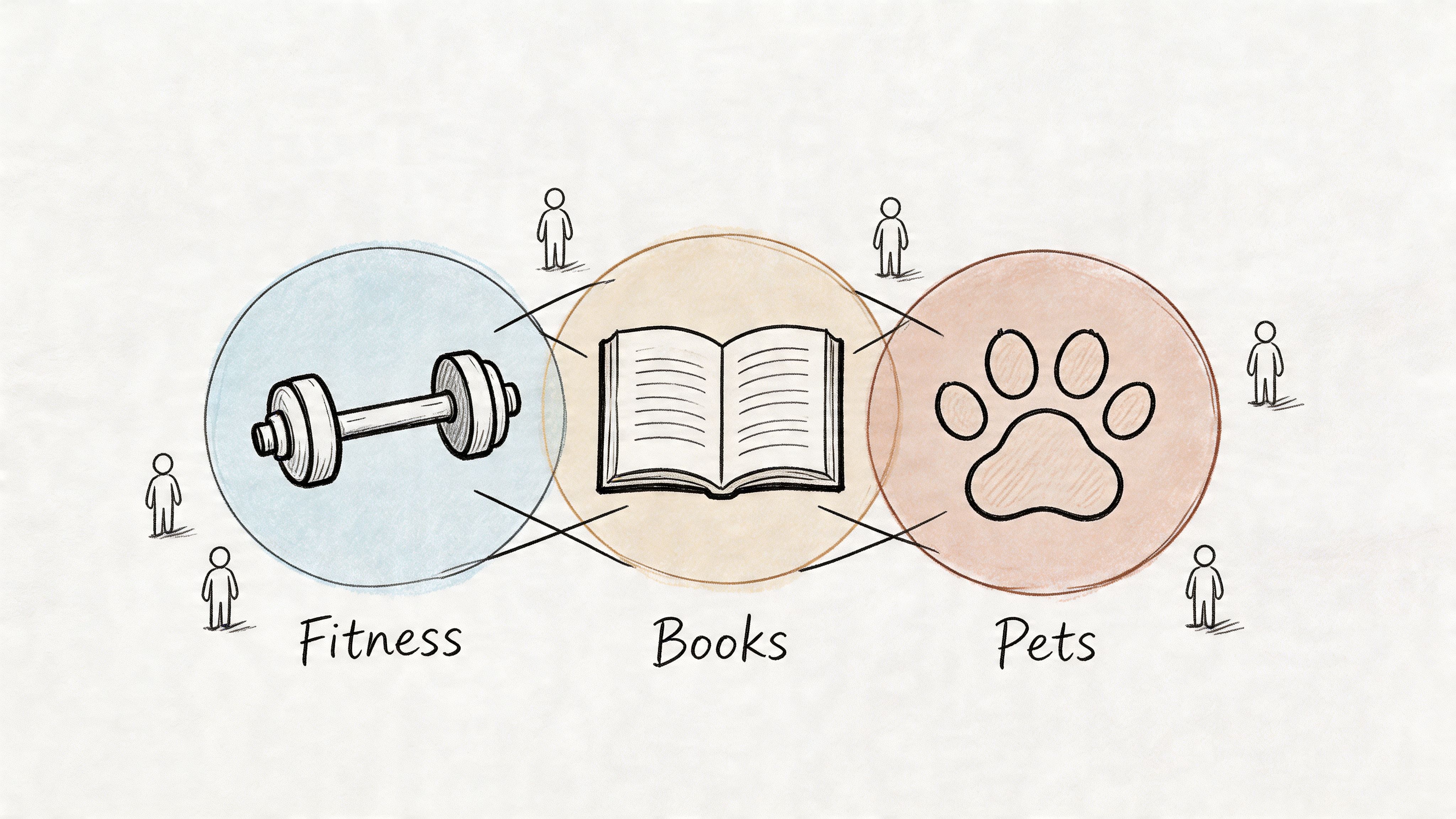
Telegram's structure matters here. Admins can use bots, entry prompts, and posting rules to sort by interest before anyone starts chatting. If a supposedly focused group has no intake questions, no posting format, and no reaction to irrelevant content, the niche is probably just branding.
Signs the niche is real:
- Topic gravity — conversations keep returning to the stated interest
- Specific intros — concrete language about routines, standards, and beliefs
- Cultural consistency — humor and flirting style match the group label
- Admin follow-through — rules mean nothing if violations aren't removed consistently
- Low template reuse — identical openers usually mean spam or affiliate traffic funnels
Narrower groups have fewer members and slower volume but produce less wasted time. For orientation-specific communities, this guide to gay Telegram groups shows how focused communities signal respect and consistency.
3. Geographic Location-Based Dating Groups
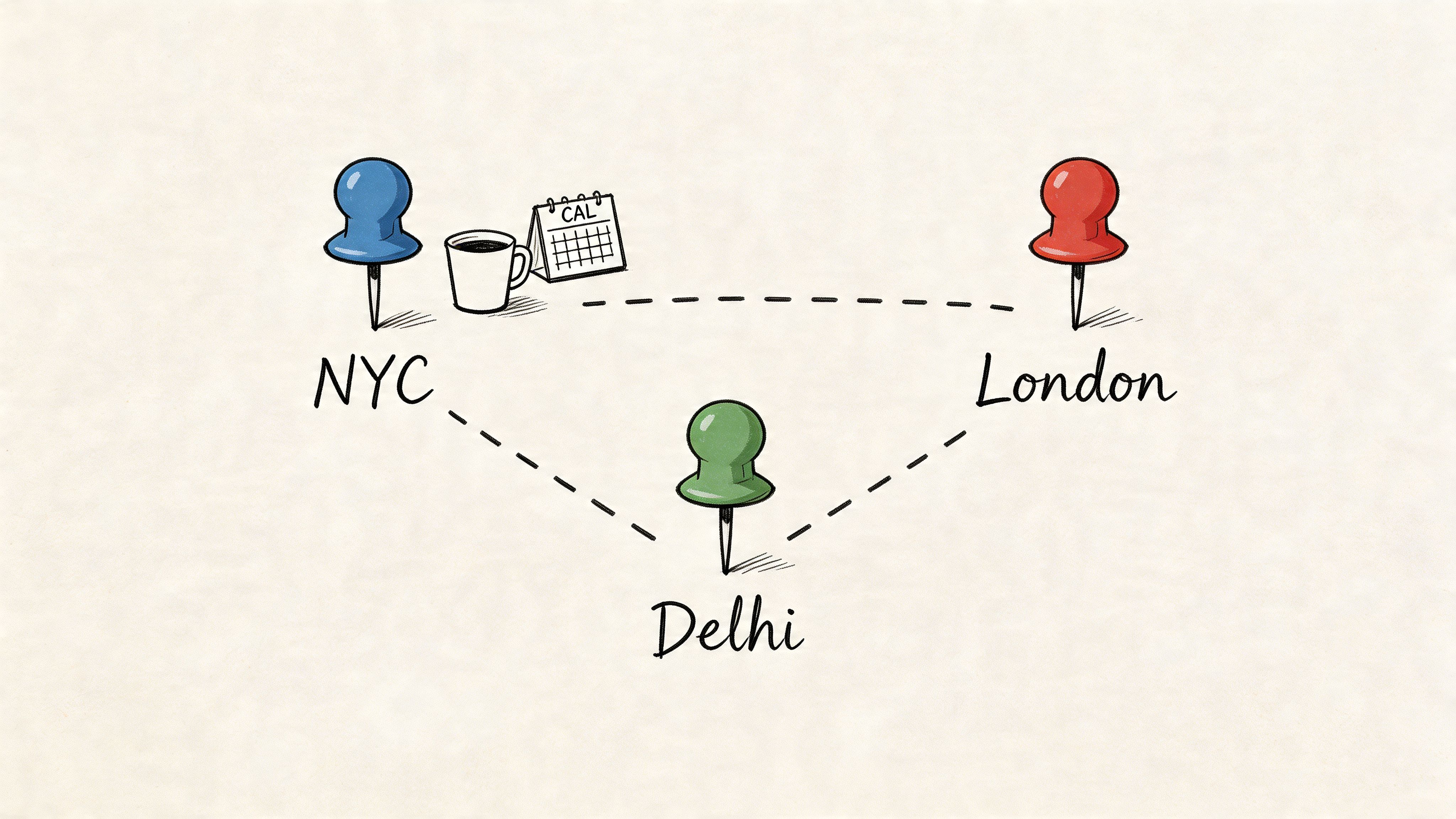
Geography filters for logistics before emotions get overcommitted. That's the primary advantage of local groups.
Credible city groups sound local without trying too hard. Members reference districts, commute patterns, venues, and timing the way a real resident would. Fake local accounts stay generic — "nearby" or "in your area" with no specifics a real resident would mention casually.
Check before participating:
- Place-level detail — real members mention neighborhoods, stations, and travel time naturally
- Time alignment — a "Berlin singles" group that's busiest on another region's schedule has a mismatched member base
- Meetup language — better groups discuss public places and timing, not endless flirting with no plan
- Repeat posters — same accounts posting vague intros across multiple city groups means a lead funnel, not a local community
Local groups usually have fewer members than international rooms. That's often an advantage when the goal is meeting someone nearby. For adult-only local rooms with tighter moderation requirements, this breakdown of 18+ Telegram group patterns is a useful comparison.
The common failure: the group says "London Dating" but most members live elsewhere. Check whether the geography matches real posting behavior before investing time.
4. Age-Demographic Specific Dating Groups
Age-bracket groups cut out mismatch before conversation starts. A group for people in their late twenties moves differently from one for over-40 singles — different scheduling, dating goals, and tolerance for ambiguity.
In practice, they filter for life logistics. Someone in "40+ serious dating" is more likely to care about children and relocation limits. Someone in "25–30 young professionals" cares more about work rhythm and travel flexibility.
Watch message style before joining:
- Tone match — if a mature singles group feels chaotic and adolescent, the label isn't doing real filtering
- Intro quality — better age-focused groups attract context about lifestyle and priorities
- Response patterns — genuine engagement shows up in replies, not just reactions or empty compliments
- Editing behavior — constant changes to age, goals, or personal status are red flags in any bracket
The best ones maintain standards without making every interaction feel like an application form. A useful side reference for age-gated spaces: 18+ Telegram group patterns and moderation signals.
5. Relationship Type Preference Groups
Intent-based groups sort by relationship goals: serious dating, casual connections, non-monogamous relationships, identity-specific communities. The upside is efficiency. The downside is that intent is easy to claim and harder to verify. For groups built specifically around casual hookups, the vetting bar is higher.
The strongest groups treat intent as a moderation standard, not a slogan. A long-term dating group removes explicit bait posts. A casual group doesn't moralize about non-exclusivity. A poly community blocks hostile debate from outsiders.
Check before joining:
- Rules vs. actual posts — "relationship-minded only" in the description but flirt spam in the feed means the filter isn't working
- Intro content — better groups attract profiles that mention boundaries, availability, and preferences in plain language
- Admin response to edge cases — serious communities clarify gray areas quickly instead of letting arguments drag
- Linked public channels — review tone and moderation before committing to a private chat
- Privacy at verification steps — if a group requires a phone step, some users rely on temporary numbers for SMS verification to keep dating activity separate from their primary number
Narrower relationship type means better fit if the group is well-run, and a smaller pool if it isn't.
6. Verification-Vetted Member Groups
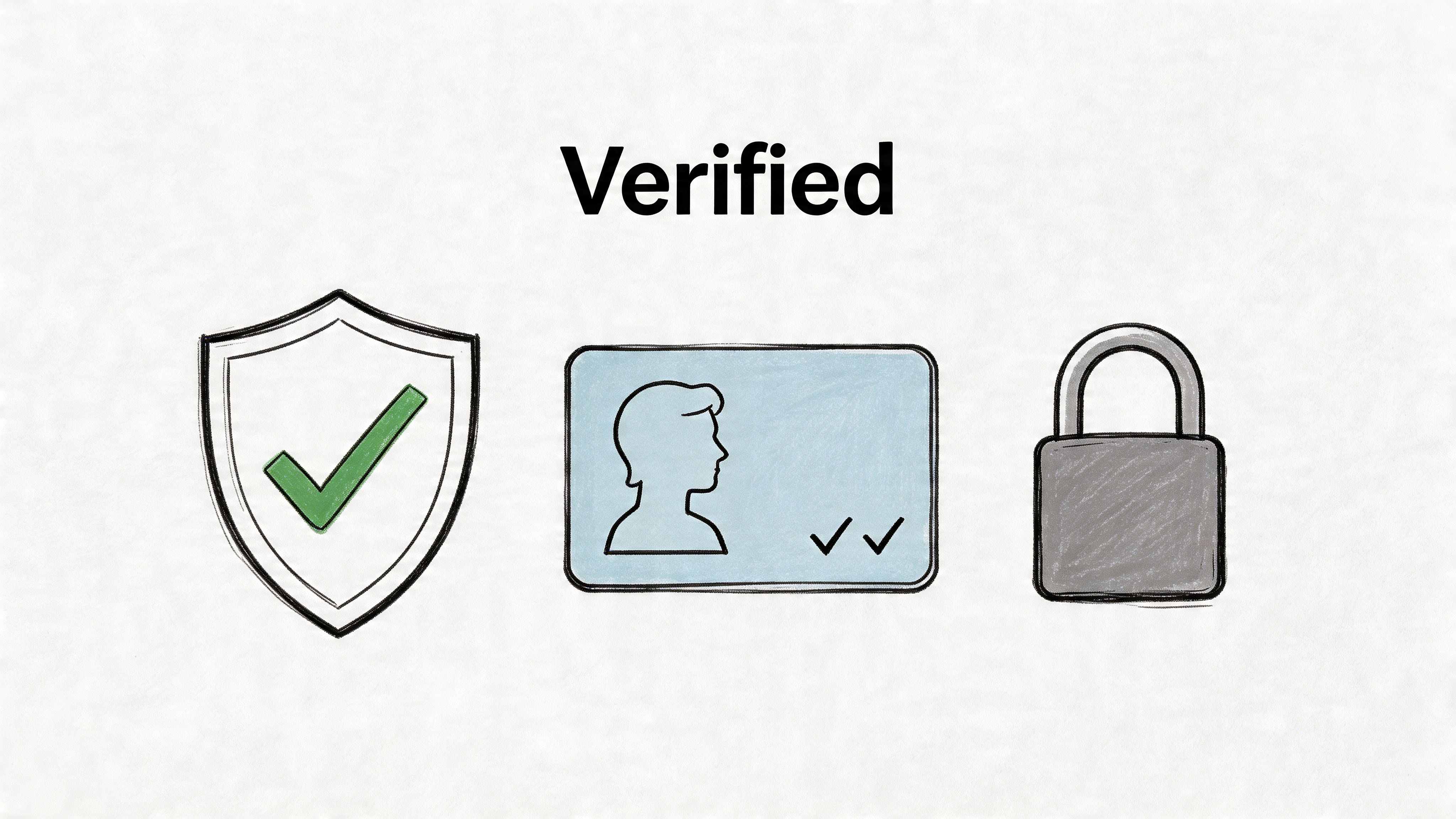
Vetted groups ask for more upfront — photo checks, voice intros, admin review, linked social profiles. You give up convenience to gain confidence.
The best vetted groups reduce impersonation and profile recycling. Members know someone screened them before entry. That tends to improve tone and reduce chaos.
Be especially careful when a group asks for sensitive documents, external login access, or unusual payment methods. "Exclusive" branding is sometimes used to justify intrusive data collection or weakly managed paywalls.
Assessing whether verification is meaningful:
- Stable member behavior — verified communities should show fewer abrupt identity shifts post-approval
- Post-approval edits — if people keep changing major details after review, the screening is shallow
- Admin transparency — serious operators explain what they check and what they don't
- Proportionality — face photo and short intro video is reasonable; money upfront with no explanation isn't
If a screening process requires a phone step, temporary numbers for SMS verification can help separate dating activity from your primary number — but read the group's rules before using one.
7. International Multicultural Dating Groups
These work best for people whose dating life already crosses borders — expats, remote workers, frequent travelers, multilingual users. A solid intro includes current city, home country, languages, travel patterns, and whether long-distance or relocation is realistic.
International groups attract mixed motives. Some members want a relationship; others want attention, immigration options, language practice, or financial help. Unclear intent wastes time.
Strengths: Access outside your local pool. Better self-description because practical details matter more. Someone in Berlin open to relocation has to say that early. Distance exposes friction before emotions get ahead of logistics.
Filter carefully:
- Location consistency — "relocating soon" should come with timeline and destination, not vague answers
- Operational detail in intros — timezone, work pattern, travel frequency, language ability
- Conversation flow across languages — genuine multilingual members communicate naturally, even imperfectly; scripted accounts sound polished but generic
- Readiness vs. curiosity — interest in another culture isn't the same as willingness to build a cross-border relationship
- Admin model — good groups set expectations about language, harassment, scams, and off-platform contact
Watch for several days before engaging. Repeat copy-paste compliments and immediate requests to move to private messages means the group is running on novelty rather than trust.
8. Event-Based and Temporary Dating Groups
Time pressure changes behavior. In permanent groups, people can postpone decisions indefinitely. In event-based groups — conferences, festivals, travel windows, city pop-ups — delay kills the opportunity.
Shared timing and shared location reduce the usual ambiguity around intent. That's the value here, not long-term community.
Good examples: - Conference or meetup attendees wanting to connect during a fixed window - Travel-date groups tied to one city and one month - Festival or holiday groups where timing matters more than profile depth - Local event chats spun up by organizers or creators
Check four things:
- Recency — posts should cluster around actual event dates, not random bursts from weeks earlier
- Operational detail — real members mention arrival times, neighborhoods, venue access, and availability
- Admin hygiene — competent admins pin dates, clarify scope, and archive or reset the room after the event
- Conversion quality — useful chats move toward a specific plan; weak ones stay stuck in flirting with no logistics
Watch whether the group produces public coordination before private messaging. In healthier rooms, people establish context first — which event, which day, which area. In weaker ones, strangers push for DMs immediately because the group itself offers no trust layer.
For users with a fixed travel window, event groups can outperform broader telegram groups for dating because the filter is built into the calendar.
Telegram Dating Groups: 8-Category Comparison
| Group Type | Implementation Complexity 🔄 | Resource Requirements ⚡ | Expected Outcomes 📊⭐ | Ideal Use Cases 💡 | Key Advantages ⭐ |
|---|---|---|---|---|---|
| General Interest Dating Groups | Low, easy to create, minimal rules 🔄 | Low, little moderation or vetting ⚡ | High reach, low authenticity; noisy signals 📊 ⭐ | Broad discovery, market sizing, rapid user acquisition 💡 | Large pool and easy onboarding ⭐ |
| Niche/Preference-Based Dating Groups | Medium, requires curation and targeted rules 🔄 | Medium, focused moderation and community tools ⚡ | Higher-quality matches, clearer signals 📊 ⭐⭐ | Matching by specific interests or values (fitness, hobbies) 💡 | Better relevance and lower spam ⭐⭐ |
| Geographic/Location-Based Dating Groups | Medium, location setup and timezone handling 🔄 | Medium, local moderation and meetup support ⚡ | Predictable local engagement, seasonal patterns 📊 ⭐⭐ | Local meetups, city-specific outreach, regional forecasting 💡 | Natural distance filtering and meetup facilitation ⭐⭐ |
| Age-Demographic Specific Dating Groups | Low–Medium, age gating and tone management 🔄 | Low–Medium, tailored moderation and content ⚡ | Consistent life-stage engagement, varying tech adoption 📊 ⭐⭐ | Life-stage matching (25–35, 40+) and generational studies 💡 | Relevant matches and predictable behavior patterns ⭐⭐ |
| Relationship Type/Preference Specific Groups | Medium, strict rules and enforcement needed 🔄 | Medium–High, active moderation to enforce norms ⚡ | High alignment on goals, clearer member intent 📊 ⭐⭐⭐ | Seeking specific relationship outcomes (serious, casual, poly) 💡 | Strong value alignment and reduced time-wasters ⭐⭐⭐ |
| Verification/Vetted Member Dating Groups | High, multi-step verification workflows 🔄 | High, verification tools, screening, admin time ⚡ | Highest authenticity and safety; steady engagement 📊 ⭐⭐⭐ | Premium, safety-focused communities and research on verification ROI 💡 | Best trust, security, and message quality ⭐⭐⭐ |
| International/Multicultural Dating Groups | Medium, multilingual and timezone coordination 🔄 | Medium, translation support and cross-cultural moderation ⚡ | Wide reach with cross-border complexity; varied clarity 📊 ⭐⭐ | Expats, cross-cultural matches, language exchange 💡 | Global pool and cultural exchange opportunities ⭐⭐ |
| Event-Based and Temporary Dating Groups | Low, quick setup tied to event timeline 🔄 | Low–Medium, event coordination, time-bound resources 🔄 | Short-term high activity, clear lifecycle metrics 📊 ⭐ | Conference meetups, festival hookups, time-limited experiments 💡 | Measurable event-driven engagement and churn data ⭐ |
Action Plan
Classify the group, check how it behaves in public, verify what it asks from members, then decide. Each category carries a different trade-off: general groups give volume and noise; niche groups improve intent matching but can become insular; local groups create realistic meetup potential but attract location fraud; vetted groups improve trust but often ask for more than casual users should share.
Start with public signals. Many well-run communities use a public channel as a front door — it lets you assess leadership before exposing your profile or contact details. Telegram's member tags can also show roles or interests inside communities, as described in Telegram's March 2026 product update, though they don't replace moderation or identity checks. For comparing Telegram with other community options, see alternative platforms for groups.
Use this before posting anything personal:
- Match group to goal — local for in-person dating, niche for compatibility, vetted for stronger trust, event-based for short-term opportunities
- Audit the public record — look for abrupt tone shifts, deleted claims, recycled promotions, or unexplained inactivity
- Test moderation quality — obvious spam that stays visible for long stretches means weak enforcement
- Guard your identity — delay sharing phone number, workplace, or exact neighborhood until someone has earned that access
- Check verification proportionality — clearly explained process, admins with a visible track record
- Exit fast if needed — pressure tactics, fake urgency, and inconsistent rules are enough reason to leave
Join fewer groups. Watch longer. Reply to people whose behavior stays consistent over time, not just the polished profiles or aggressive attention-getters.
If you want to inspect a public Telegram channel tied to a dating community before joining, try Statiko. It helps you review edit history, deletion patterns, growth signals, and posting behavior so you can judge whether the group's public-facing leadership looks stable before you commit time or personal information.
Joined more than you can keep up with?
Statiko Recaps reads the public channels you pick and sends a single digest with only what matters — instead of forty muted chats you never open. See how Recaps works.
Related posts

Launch a successful dating Telegram group. This guide covers setup, safety rules, growth tactics, moderation, and using analytics to build a thriving community.

Discover the best grupos telegram gay for dating, news, and community. Our 2026 guide helps you find safe, active, and relevant LGBTQ+ spaces on Telegram.

Explore our curated guide on how to safely discover, moderate, and analyze an 18 telegram group. Get actionable tips and tools for 2026.
Start in seconds.
Create a free account to organise channels, track activity, and get recaps delivered to you.
Real-time. Telegram. Analytics.