How to Hire a Telegram Advertising Agency That Delivers Results
Ready to hire a Telegram advertising agency? This guide provides actionable steps to find, vet, and partner with the right agency for real growth and ROI.

A Telegram advertising agency handles everything from placing ads in high-traffic channels to navigating Telegram's official ad platform. They bring access and expertise that most brands can't build in-house.
Why You Need a Specialized Telegram Agency
Telegram's official Sponsored Messages platform is now more accessible than ever — the minimum deposit is just 20 TON (~$30 at current prices), paid in Toncoin. So the barrier isn't cost anymore. The challenge is complexity.
Access to the full ad ecosystem — The official platform only covers Sponsored Messages in public channels with 1,000+ subscribers. It doesn't give you native placements negotiated directly with channel owners, mini-app push campaigns, or cross-channel network buys. Agencies have those networks and the relationships to activate them.
Cryptocurrency friction — Running ads directly requires purchasing and managing TON (Toncoin), Telegram's native cryptocurrency. Most marketing teams aren't set up for that. A good agency bills in fiat and handles the crypto layer for you.
Telegram Direct Ads vs Agency Managed Campaigns
| Feature | Direct Ad Purchase | Through an Agency |
|---|---|---|
| Minimum Deposit | 20 TON (~$30) | As low as $500–$1,500 |
| Payment Method | TON (Toncoin only) | Fiat (USD/EUR) |
| CPM (Sponsored Ads) | From 0.1 TON/1k impressions | Negotiated |
| CPM (Native Placements) | Not available | $1 - $10 |
| CPC (Mini-App Pushes) | Not available | ~$0.015 |
| Access to Networks | Official ads only | Official, native, & mini-apps |
| Channel Vetting | Manual, high-risk | Data-driven with tools |
| Expertise Required | Extremely high | Provided by agency |
Data and transparency — Telegram's ecosystem lacks public performance data. A channel with 100,000 subscribers could be 40% bots. Good agencies use tools like Statiko to check growth patterns, spot subscriber spikes, and verify real engagement before placing any budget. If you want to understand what fake growth looks like in practice, see our breakdown of buying Telegram channel subscribers. Learn more in our state of Telegram 2025 analysis.
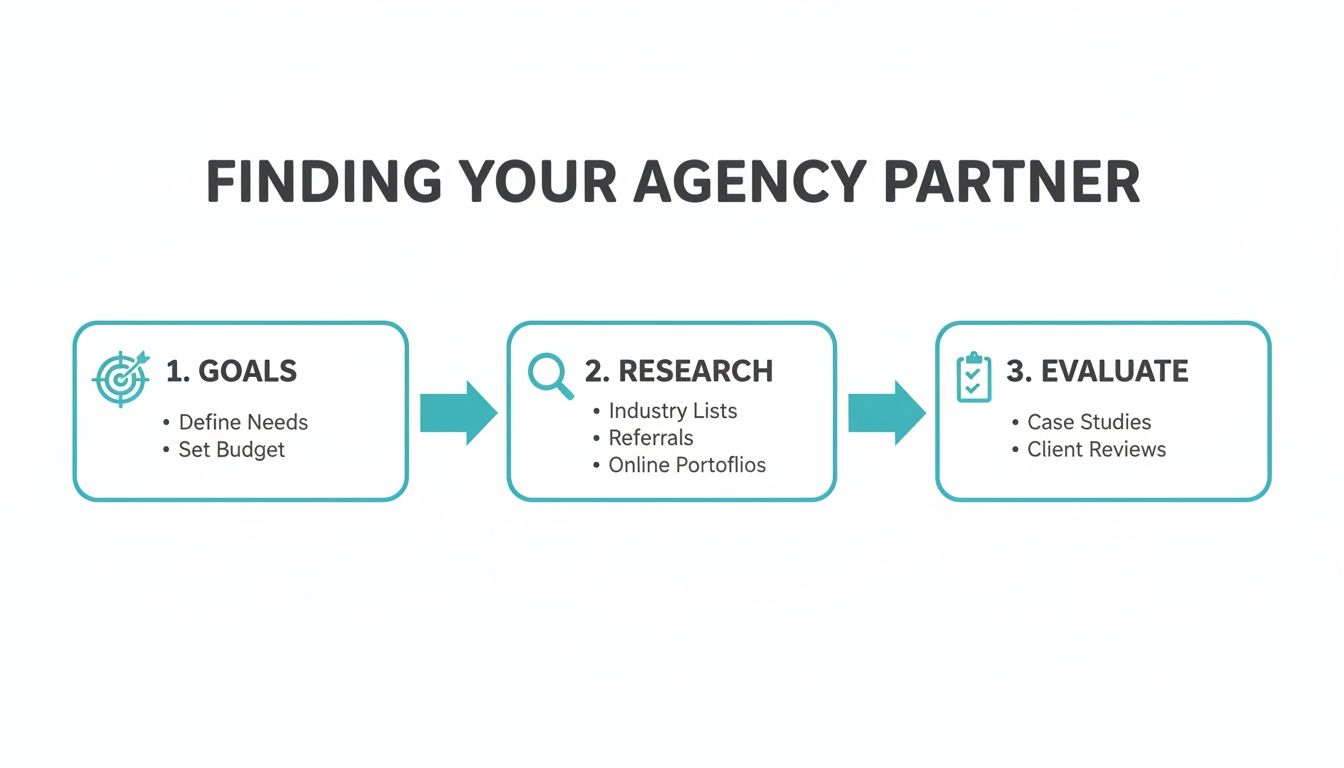
Defining Your Goals and Finding the Right Agency
Before hiring anyone, translate your business goals into concrete Telegram metrics. "Grow on Telegram" is not a goal. These are:
- Drive sales: 2,000 qualified clicks/month, CPA under $10
- Build brand awareness: 5,000 new subscribers in 90 days, 30% average post view rate
- Generate leads: 100 MQLs/month via a promoted lead magnet
Having specific numbers changes how you evaluate agencies. You stop asking "Can you grow our channel?" and start asking "How would you hit a $10 CPA?" That question alone filters out a lot of noise.
Finding candidates — Skip the generic Google results. Look in niche marketing communities, check who's running ads for competitors, and use specialized agency directories as a starting point. Avoid generalists who just added "Telegram" to their service list — they'll apply their Facebook playbook and it won't work.
Pre-screening — Most agencies worth considering mention channels they've worked with in case studies. Look those channels up on Statiko before getting on a call, using the same channel audit checklist you'd run before buying a placement. Steady organic growth is a green flag. Overnight subscriber spikes are not. A channel with 100,000 subscribers and 2,000 post views is a major red flag.
Vetting Your Shortlist of Potential Agencies
Ask for two or three case studies relevant to your industry. A crypto channel success story tells you nothing if you're selling B2B software.
For each case study, check: were goals defined beyond follower counts? Was the strategy specific to Telegram? And critically — use Statiko to verify the claimed results against actual channel data. Suspicious growth spikes in their own case studies are a disqualifying flag.
References — Testimonials on a website aren't worth much. Call two actual clients and ask specific questions:
Questions for Agency References
| Category | Sample Question | What You're Looking For |
|---|---|---|
| Communication | "How responsive was the team? What was their process for regular updates?" | Proactive updates, not just putting out fires. |
| Strategy | "Can you describe a time the agency had to adapt their strategy?" | Problem-solving ability when a campaign hits a wall. |
| Reporting | "What did their reports look like? Were they focused on the right metrics?" | Business KPIs (CPA, leads) over vanity metrics. |
| Transparency | "Were there any unexpected costs or issues? How did they handle them?" | Honesty about budget management and challenges. |
RFP — A short RFP forces every agency to answer the same questions so you can compare them directly. Focus on strategic thinking, not service lists:
- Based on our goal of generating 100 MQLs/month, what would your initial 90-day strategy look like?
- Which channels would you target for our brand and why? Show data-backed justifications.
- How do you measure and report ROI?
- Walk us through your content creation and approval process.
The quality of their answers reveals strategic depth faster than any sales call.
Navigating Agency Pricing Models and Contracts
Most pricing models come down to three structures:
| Pricing Model | Best For | Pros | Cons |
|---|---|---|---|
| Monthly Retainer | Ongoing management, long-term brand building. | Predictable cost, strategic alignment. | Harder to quantify value in slow months. |
| Commission-Based | Lead gen or direct sales campaigns. | Agency incentivized to perform. | Can get expensive on successful campaigns. |
| Project-Based | Product launches, one-off campaigns. | Fixed scope and cost, no commitment. | Less flexible; may cost more for ongoing needs. |
Pick the model that matches your campaign scope and timeline.
Contract checklist — A vague contract is how partnerships fall apart. Before signing, confirm these are defined in specific terms:
- Scope of Work: Number of ad placements, content deliverables (e.g., 10 text posts with visuals), reporting cadence — no vague language.
- KPIs: Exact metrics that define success. Subscriber growth targets, minimum engagement rate, target CPA. If it's not written, it doesn't count.
- Content ownership: You own everything you paid for. Get this in writing.
- Reporting format: Frequency and what the reports must include.
- Termination clause: Required notice period (e.g., 30 days) and final payment terms.
Managing Your Agency for Long-Term Success
Signing the contract is the starting point, not the finish line.
Workflow — Set up a central communication hub (Slack, Trello, whatever your team uses) from day one. Define approval turnaround times and what information the agency needs to submit with each creative asset. This prevents the bottlenecks that kill campaign timelines.
KPIs to track independently:
- Subscriber growth rate — steady, sustained increase
- Engagement rate — reactions, comments, shares
- Post views — how many unique users see your content
- Click-through rate (CTR) — for campaigns driving traffic
- Cost per acquisition (CPA) — the bottom line for sales campaigns
Independent verification — Don't just read agency reports. Use Statiko to watch the same data yourself. When your agency reports a big subscriber jump after an ad placement, check whether that growth was organic and gradual or an overnight spike. Knowing the difference lets you ask better questions and hold the agency accountable.
Telegram is projected to hit 1 billion monthly active users, up from 35 million in 2014. With over 1 trillion monthly channel views, the scale makes independent verification critical — see Telegram statistics for context.
Regular check-ins — Weekly or bi-weekly calls to review performance and share context from your side: upcoming product launches, market shifts, things the agency needs to factor into their strategy.
FAQ
What results can I realistically expect? Three to six months is the typical window for meaningful growth — steady subscriber gains, improving engagement, better CTR. E-commerce brands should start converting that engagement into leads and sales by then. A good agency sets benchmarks based on real competitor data using tools like Statiko, not guesswork.
How much does it cost? Agency fees range from a few hundred to several thousand per month, before ad spend. Basic packages ($500–$1,500/month) cover channel management and a few placements. Mid-tier ($2,000–$5,000/month) adds content creation and proper campaign planning. Full-service retainers ($10,000+/month) are for brands that want comprehensive strategy and execution. The cheapest option is rarely the best return.
How do I know if an agency is using bots? The pattern is easy to spot: a large overnight subscriber spike with no corresponding rise in post views or engagement. If a channel has 100,000 followers but posts get 2,000 views, something's wrong. Statiko's growth tracking shows day-by-day subscriber changes — organic growth is gradual, bot traffic shows up as a sudden vertical line. A legitimate agency welcomes this kind of scrutiny.
Can I run Telegram ads directly without an agency? Yes. Telegram's official Sponsored Messages platform now accepts a minimum deposit of just 20 TON (~$30), paid in Toncoin. You can set up an account at ads.telegram.org and target any public channel with 1,000+ subscribers. The catch: you need to acquire TON cryptocurrency, and you only get access to the official Sponsored Messages format — no native channel placements or mini-app campaigns. If you're comfortable with crypto and want to test the platform before hiring anyone, it's worth doing. For a full breakdown of all available options, see our Telegram ads platform comparison.
Can a Telegram agency help with content creation? Most full-service agencies include it — ad copy, visuals, content calendars. Ask to see their portfolio, especially work from your industry. The best agencies understand that Telegram's tone is informal and community-driven. Content that feels like a recycled Instagram post will underperform. They should also use data to decide posting times and formats.
Ready to bring some serious transparency to your Telegram marketing? Statiko gives you the tools to verify agency performance, track your competitors, and make decisions backed by real data. Analyze any public channel for free and see the story behind the numbers.

Start in seconds.
Create a free account to organise channels, track activity, and get recaps delivered to you.
Real-time. Telegram. Analytics.