Analyze Intel Slava Z Telegram: Your OSINT Guide
Learn how to analyze the Intel Slava Z Telegram channel using OSINT techniques. This guide shows you how to use Statiko to track edits, deletions, and growth.

You open the feed, scan recent posts, note the tone, capture screenshots. That's rarely enough.
Channels operating at the intersection of war, geopolitics, and breaking events shape perception through sequence, timing, edits, and deletions — not just the visible post in front of you. If you only read the current feed, you're studying the final draft of a narrative.
That difference matters for journalists, researchers, threat analysts, and anyone trying to understand how Telegram discourse moves.
Beyond the Feed
Telegram has become a working environment for real-time information competition. Intel Slava Z sits squarely in that category, with tens of thousands of views per post. That reach and velocity is why it deserves careful analysis, not casual reading.

Three reasons this channel matters to OSINT work:
- It influences fast-moving discourse. Large aggregators posting early become routing points for discussion across Telegram.
- It compresses multiple sources into one narrative lane. That saves time for readers but hides how claims were selected, framed, and sequenced.
- It rewards immediacy over closure. Early updates attract attention. Later corrections attract less.
That last point is where most weak analysis breaks down. Analysts archive the headline claim and move on. But a channel's credibility is measured not just by what it posts — also by what it changes, what it deletes, and how it handles uncertainty.
Native Telegram is excellent for distribution. It's poor for retrospective accountability. If a channel edits a post, the current version may look cleaner than the original. If it deletes a post, many observers will never know it existed.
Serious Telegram analysis has to move from content consumption to content reconstruction. You need the timeline, not just the artifact.
The Problem with Surface-Level Intelligence
What you're seeing is the version that survived.
Telegram lets operators reshape the visible record with little friction — posts adjusted after publication, claims softened, inconvenient messages removed. Statiko's channel timeline for @intelslava highlights a core limitation: existing analysis often overlooks subscriber growth analytics and engagement patterns, and public tools lack granular data on how content correlates with follower spikes or message revisions.
A shallow review workflow usually looks like:
- Read recent posts
- Capture screenshots
- Summarize themes
- Assign intent
Here's what it tends to miss:
| Gap | Why it matters |
|---|---|
| Silent wording shifts | "Confirmed event" becomes "developing report" |
| Deletion patterns | Removed posts reveal as much as published ones |
| Cadence changes | Posting bursts often signal more than individual messages |
| Engagement context | Central-looking posts may not be what pulled attention |
Mirrors and previews aren't enough for forensic work. They tell you a post exists or existed. They rarely tell you whether language changed, whether the post disappeared, or how that fits into a broader pattern.
If your method can't show edits, deletions, and timing, you're not analyzing the channel. You're analyzing its latest self-presentation.
Recovering Edits and Deletions
A reliable workflow starts with one assumption: the current post may not be the original post.
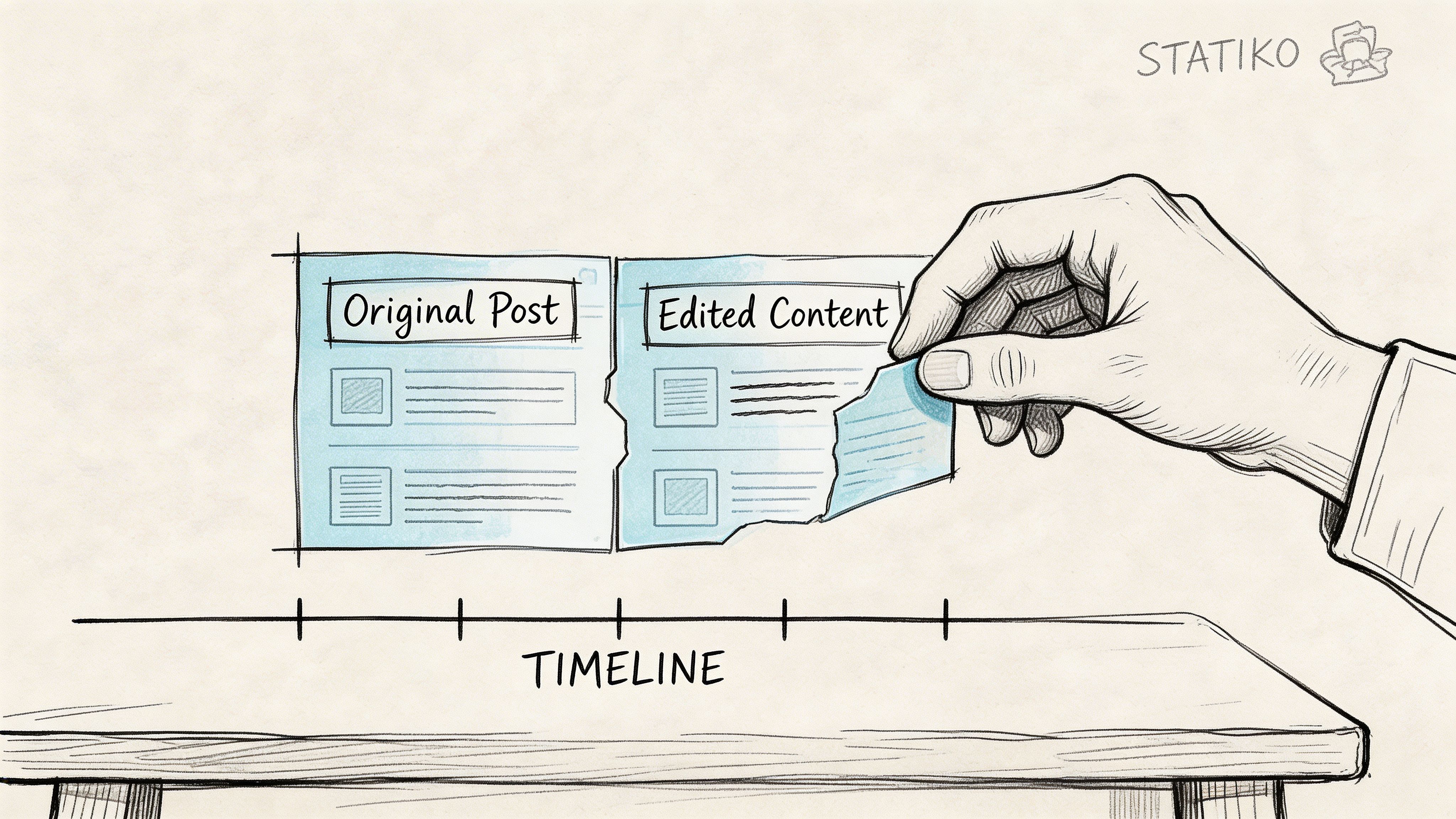
Don't begin with the current feed. Begin with historical message records. A major challenge is that most tools can't recover deleted messages, which biases any review of what the channel published and later removed — as noted on Nicegram's page for @intelslava.
Use this order:
- Pull the channel record
- Sort by publication time
- Enable edit visibility
- Flag deleted entries
- Review surrounding posts before drawing conclusions
What to look for in edited posts: Direction of change matters more than the edit itself. Did a "confirmed" claim later become "reports indicate"? Did the channel add attribution distance after publishing directly? Did later edits insert caveats the original readers never saw?
Deleted posts are often the missing middle:
| Question | Why it matters |
|---|---|
| Was the deleted post topic-sensitive? | Some subjects produce faster correction cycles |
| Did nearby posts revise the same claim? | Deletion often pairs with indirect cleanup |
| Was it isolated or part of a burst? | Clusters reveal operational stress or narrative reset |
Reconstructing the timeline:
- Anchor the initial claim — capture the earliest version with timestamp and media state
- Compare every revision — the meaningful shift may be one verb or one removed certainty marker
- Review adjacent messages — channels often repair a deletion with a broader "update" that resets the narrative without acknowledging the removed claim
- Tag the pattern — use consistent labels: correction, narrative softening, narrative hardening, attribution distancing, removal without acknowledgment
- Store evidence — save timestamps, post text, revision notes, deletion evidence, and surrounding context
For a detailed workflow on this, the companion guide on how to recover deleted Telegram messages covers it in depth.
Growth and Engagement Patterns
Message-level reconstruction tells you what changed. Growth analysis tells you what worked.
Intel Slava Z was created in 2020 and achieved the highest engagement rates among 50 large pro-Russian foreign language Telegram channels analyzed by Civil Network OPORA. OPORA also notes the channel originally launched as Intel Slava and added the "Z" suffix post-invasion — a clear example of narrative adaptation tied to major events, as documented in Civil Network OPORA's analysis.
Don't open a growth chart looking only for spikes. What matters is the relationship between publishing tempo, topic shifts, audience response, and durability of attention.
| Dashboard element | Better question |
|---|---|
| Subscriber trend | Did growth coincide with a topic expansion or branding shift? |
| Posting frequency | Is volume rising because demand is real, or chasing relevance? |
| Reach by post | Are updates, footage, summaries, or commentary pulling most attention? |
| Timing patterns | Does the channel publish when events break, or when audiences peak? |
Content eras matter. Map the channel into distinct periods based on naming, tone, and conflict focus. Strong channels hold attention through adaptation, not just during one crisis. Review posting bursts during external events — not every burst is strategic. Look for repeatable content formats, not individual viral posts.
What works in this niche: consistent event alignment, recognizable formatting, publishing around live demand. What doesn't: over-reading isolated surges or assuming every reach increase reflects trust. Growth metrics are useful only when read alongside message history and topic shifts.
For reference on what measurements matter, this overview of Telegram channel analytics is a useful companion to this workflow.
Competitive Intelligence
A single-channel review tells you how one operator behaves. Competitive intelligence tells you whether that behavior is unusual, effective, or replaceable.
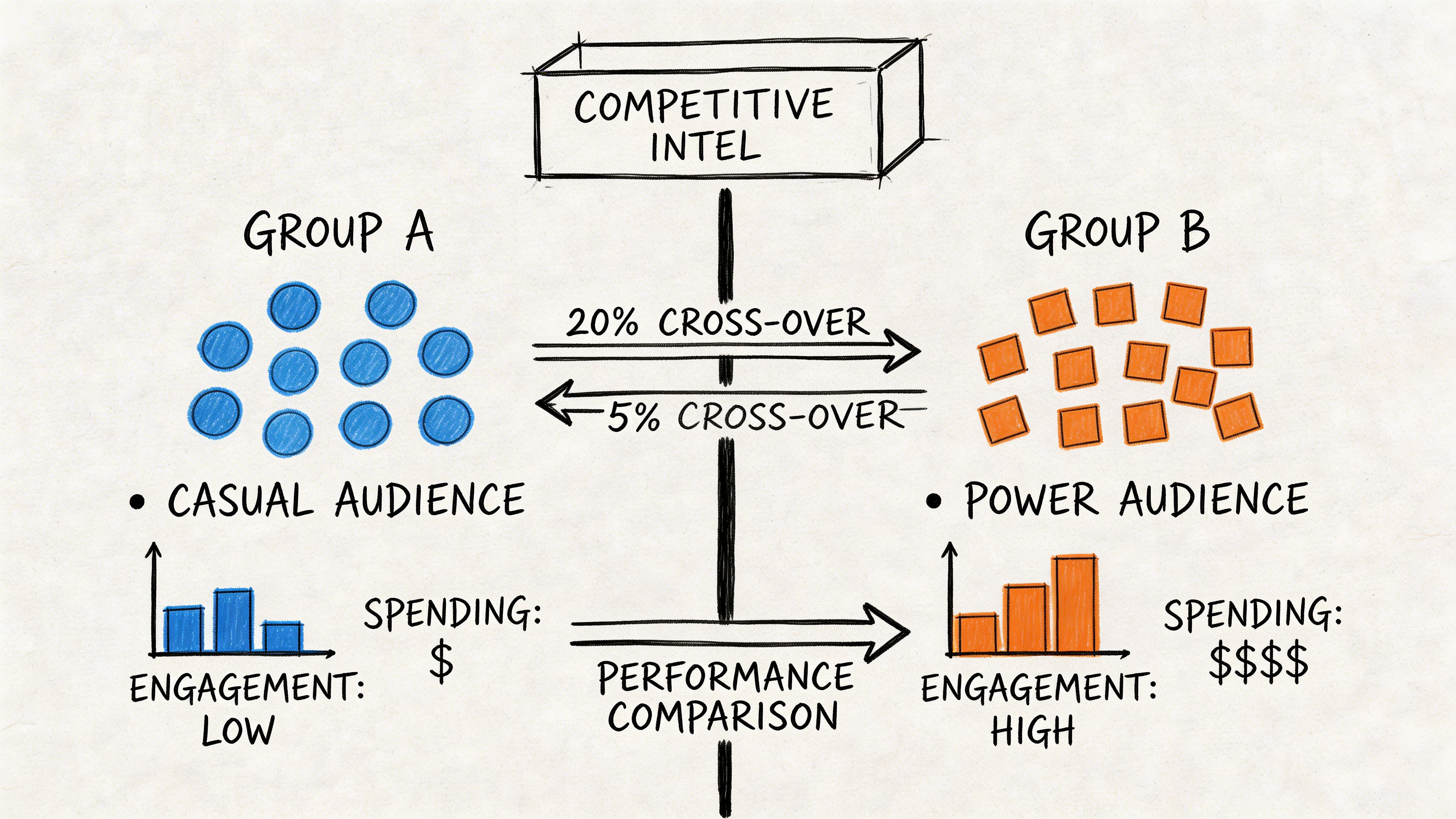
Don't compare a military news aggregator to a lifestyle channel. Compare it to channels competing for the same user attention: rapid geopolitical aggregators, conflict map publishers, war footage channels, foreign-language narrative accounts.
Audience overlap is one of the fastest ways to map an information lane:
| Signal | Interpretation |
|---|---|
| Similar audience, similar format | Direct competitor |
| Similar audience, different format | Adjacent source or collaboration target |
| Different audience, similar topic | Limited competitive pressure |
| Similar behavior, weak overlap | Operational resemblance without market overlap |
Beyond obvious metrics, compare editorial reaction speed, revision behavior, narrative persistence, and audience portability. A channel can look dominant in isolation and look ordinary beside the right peers.
A practical comparison workflow:
- Start with Intel Slava Z as the anchor channel
- Add direct functional peers (war/geopolitics channels at similar speed)
- Add audience-adjacent channels (different style, same attention pool)
- Review a fixed time window across all peers
- Score by: tempo, narrative discipline, engagement stability, topic responsiveness
Ethical Guidelines
Stay inside public-data boundaries — responsible Telegram analysis covers public channels only. No attempts to access private channels, groups, or DMs through workaround logic.
Separate evidence from interpretation. Observation: a post was edited, a message disappeared. Interpretation: the edit appears to soften the original claim. Keep them distinct — many Telegram narratives are contested in real time, and good analysts preserve uncertainty when uncertainty is the honest state of the evidence.
Avoid confirmation bias. Conflict channels pull analysts into binary thinking. Every edit looks sinister, or every correction looks responsible. Neither works. Look for patterns, not emotional proof. One edit means little; repeated softening of unverified claims means more. One deletion is ambiguous; a cluster around the same topic becomes analytically relevant.
Quote carefully and timestamp everything. If you cite a Telegram post, record when you saw it and whether you're quoting the original or a revision. If a post was deleted, state it clearly. This protects your readers from accidental distortion and protects you when someone later disputes the record.
FAQ
Can Telegram analysis tools access private channels or DMs? No. Responsible OSINT stays within publicly available data only.
Why isn't reading the live feed enough? A live feed shows only the current post state — not edit history, deletion history, or the surrounding narrative sequence.
Why do deleted posts matter? They change the visible record. Without them, you may miss how a narrative was first framed or later withdrawn.
Are edits always suspicious? No. Some are routine cleanup. Analytical value comes from recurring patterns, direction of change, and timing around sensitive topics.
Can you benchmark without historical metrics? Only partially. You can describe current behavior, but not trendlines, engagement consistency, or reaction to external events.
Is it legal to analyze public Telegram channels? Generally yes, but the compliance context depends on your jurisdiction, use case, and how findings are stored or published.
What should I save when reviewing a channel? Timestamps, post text, visible media state, revision notes, deletion evidence, and surrounding context.
What's the biggest mistake new analysts make with intel slava z telegram? Treating the visible post as the full truth instead of one state in a changing publication history.
If you need a cleaner way to analyze public Telegram channels with edit tracking, deletion recovery, growth snapshots, and competitive benchmarking, take a look at Statiko. It's built for researchers, channel operators, marketers, and journalists who need transparent history instead of surface-level feed reading.
Related posts

You get 5 seconds to undo a deletion. After that your odds depend on where the message was — here is what works per chat type, and what doesn't.

Master Telegram OSINT with our 2026 guide. Learn profile discovery, channel analysis, network mapping, and the best tools for open-source intelligence research.

Unlock growth with our guide to Telegram channel analytics. Learn to track key metrics, analyze competitors, and make data-driven decisions for your channel.
Start in seconds.
Create a free account to organise channels, track activity, and get recaps delivered to you.
Real-time. Telegram. Analytics.